Can you teach an old dog new tricks? In politics, the answer is usually no. Most elected officials cling to their ideological biases, despite the real-world facts that disprove their theories time and again. Most have no common sense, and most never acknowledge that they were wrong.
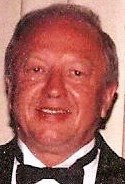
But one huge exception to this rule is Democrat Barney Frank, chairman of the House Financial Services Committee.
For years, Frank was a staunch supporter of Fannie Mae and Freddie Mac, the giant government housing agencies that played such an enormous role in the financial meltdown that thrust the economy into the Great Recession. But in a recent CNBC interview, Frank told me that he was ready to say goodbye to Fannie and Freddie.
"I hope by next year we'll have abolished Fannie and Freddie," he said. Remarkable. And he went on to say that "it was a great mistake to push lower-income people into housing they couldn't afford and couldn't really handle once they had it." He then added, "I had been too sanguine about Fannie and Freddie."
When I asked Frank about a long-term phase-out plan that would shrink Fannie and Freddie portfolios and mortgage-purchase limits, and merge the agencies into the Federal Housing Administration (FHA) for a separate low-income program that would get government out of middle-income housing subsidies, he replied, "Larry, that, I think, is exactly what we should be doing."
Frank also said that any federal housing guarantees should be transparently priced and put on budget. But he added that the private sector must be encouraged to re-enter housing finance just as the government gradually withdraws from it.
Some would say Frank's mea culpa is politically motivated in advance of an election where bailout nation and big government are public enemies No. 1 and 2. Of course, poll after poll shows that the $150 billion Fan-Fred bailout, which the Congressional Budget Office estimates could rise to $400 billion , is detested by voters and taxpayers everywhere.
In fact, these failed government agencies are in such bad shape that they can't even pay Uncle Sam the dividends owed under the conservatorship deal reached two years ago. That's right. In order to pay a $1.8 billion dividend on Treasury department stock, Fan and Fred had to borrow $1.5 billion from -- you guessed it -- the Treasury.
Then there's this head-scratching detail: In an absolutely outrageous move last Christmas Eve, President Obama signed off on $42 million in bonuses for the top 12 Fannie and Freddie executives, including $6 million apiece for the two CEOs. (Hat tip to attorney Stephen B. Meister.)
Showing posts with label Rep. Barney Frank. Show all posts
Showing posts with label Rep. Barney Frank. Show all posts
Saturday, August 21, 2010


Saturday, July 10, 2010
Shore Bank - an audit might threaten Chicago's Democrat pols
The corrupt Shorebank bailout has pitted one faction of the left against another. On the one side are those like Geithner, who are starting to wake up to the grim economic reality that bailouts and corruption have imposed on our nation. On the other side are those like Schakowsky, who are determined to borrow, spend, and tax our nation into penury in order to chase their radical ideals and reward their political cronies.
The dividing line between the two factions is not based on ideology, but circumstance: those with actual responsibilities are the ones getting cold feet. Even Rep. Barney Frank (D-MA) was prepared to allow an investigation of ShoreBank and other bailouts into the financial regulation bill, until that amendment was killed in Senate negotiations at the last moment by those determined to cover up the role of the White House in the affair.
Schakowsky and other Chicago politicians who have lobbied for the ShoreBank bailout claim they are acting on behalf of a bank that serves needy communities. What they refuse to explain is why ShoreBank is the only community development bank they have campaigned and lobbied for, out of all the community development financial institutions in America that would be eligible for the $1 billion set aside within TARP for their benefit.
Schakowsky did not try to bail out Park National Bank, for example, which failed last year and had a distinguished record of addressing the needs of low-income customers. Nor has she tried to help banks in her own community, such as Bank of Lincolnwood, which was an iconic symbol in the 9th congressional district. This year alone, 11 banks have failed in Illinois, and 86 nationwide. None received the help ShoreBank is getting.
The Treasury is backing away from ShoreBank because of the mounting political and financial cost of supporting it. Schakowsky and other Illinois politicians are determined to save ShoreBank because of what might be revealed in an audit if it were allowed to fail. This is the classic pattern of failed hegemonic political movements, left or right: they fall apart not over differences of principle, but over the rapidly dwindling spoils of power.
Subscribe to:
Posts (Atom)