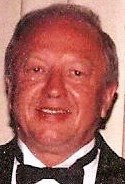
The caliph in Sunni Islam is the symbol of the supranational unity of the Muslims, and is the successor of Muhammad as the military, political, and spiritual leader of the Islamic community. There hasn’t been a caliph for nearly 90 years, but now Pakistan’s Minister of State for Industries, Ayatullah Durrani, has a novel idea for just the right man for the job: Barack Obama!
The caliphate was abolished in 1924 by the secular Turkish government; foremost on the agenda of Islamic supremacists worldwide is its restoration. Hamstringing that effort, however, has been the lack of a candidate who would be acceptable to everyone concerned. The elusive one-eyed Islamic cleric who leads the Taliban in Afghanistan, Mullah Omar, was declared caliph—Emir al-Momineen, or Leader of the Believers—by his followers in 1994.
Omar went to the Shrine of the Respectable Cloak of Muhammad in Kandahar, climbed up onto its roof, and wrapped himself in the Muslim prophet’s cloak, to the jubilation of his followers below. But Omar's claim to the caliphate has been complicated by a number of matters since then—notably the toppling of the Taliban from state power by American forces—and his claim to the caliphate has been acknowledged by only one group outside Afghanistan: Al Qaeda in the Islamic Maghreb, a group formerly known as the Salafist Group for Preaching and Combat—a name that shares none of the U.S. government’s delicacy about identifying Islamic preaching as a not infrequent source of jihad violence.
The restoration of the caliphate is foremost on the agenda of the global mujahedin because, according to Islamic law, the caliph alone can declare offensive jihad against infidel nations—which is why Osama bin Laden and other jihad theorists cast all the present actions of Islamic jihadists as defensive.
Islamic supremacists also see the abolition of the caliphate as the loss of the unity of the umma, the Islamic community worldwide; they see a divided Islamic umma as a weakened one, subject to buffeting and humiliation from colonialist and neo-colonialist powers.
And so Durrani, a member of Pakistan’s governing People’s Party, said: “The time is approaching fast. Barack Hussein Obama must act now. This is a golden opportunity, Muslims badly need it.”
He added that on the Muslim feast of Eid-ul-Fitr, which marks the end of the fasting month of Ramadan and falls this year on September 11, Obama should offer the prescribed Eid prayers and seize the moment to declare himself caliph. “In this way,” said the starry-eyed Durrani, “all the problems of the Muslim world would be solved.”
Showing posts with label Taliban. Show all posts
Showing posts with label Taliban. Show all posts
Wednesday, September 8, 2010


Sunday, July 25, 2010
NYT: Taliban have used heat-seeking missiles on allied planes
A six-year archive of classified military documents made public on Sunday offers an unvarnished, ground-level picture of the war in Afghanistan that is in many respects more grim than the official portrayal.
The secret documents, released on the Internet by an organization called WikiLeaks, are a daily diary of an American-led force often starved for resources and attention as it struggled against an insurgency that grew larger, better coordinated and more deadly each year.
The New York Times, the British newspaper The Guardian and the German magazine Der Spiegel were given access to the voluminous records several weeks ago on the condition that they not report on the material before Sunday.
The documents — some 92,000 reports spanning parts of two administrations from January 2004 through December 2009 — illustrate in mosaic detail why, after the United States has spent almost $300 billion on the war in Afghanistan, the Taliban are stronger than at any time since 2001.
As the new American commander in Afghanistan, Gen. David H. Petraeus, tries to reverse the lagging war effort, the documents sketch a war hamstrung by an Afghan government, police force and army of questionable loyalty and competence, and by a Pakistani military that appears at best uncooperative and at worst to work from the shadows as an unspoken ally of the very insurgent forces the American-led coalition is trying to defeat.
The material comes to light as Congress and the public grow increasingly skeptical of the deepening involvement in Afghanistan and its chances for success as next year’s deadline to begin withdrawing troops looms.
The archive is a vivid reminder that the Afghan conflict until recently was a second-class war, with money, troops and attention lavished on Iraq while soldiers and Marines lamented that the Afghans they were training were not being paid.
The reports — usually spare summaries but sometimes detailed narratives — shed light on some elements of the war that have been largely hidden from the public eye:
• The Taliban have used portable heat-seeking missiles against allied aircraft, a fact that has not been publicly disclosed by the military. This type of weapon helped the Afghan mujahedeen defeat the Soviet occupation in the 1980s.
• Secret commando units like Task Force 373 — a classified group of Army and Navy special operatives — work from a “capture/kill list” of about 70 top insurgent commanders. These missions, which have been stepped up under the Obama administration, claim notable successes, but have sometimes gone wrong, killing civilians and stoking Afghan resentment.
• The military employs more and more drone aircraft to survey the battlefield and strike targets in Afghanistan, although their performance is less impressive than officially portrayed. Some crash or collide, forcing American troops to undertake risky retrieval missions before the Taliban can claim the drone’s weaponry.
• The Central Intelligence Agency has expanded paramilitary operations inside Afghanistan. The units launch ambushes, order airstrikes and conduct night raids. From 2001 to 2008, the C.I.A. paid the budget of Afghanistan’s spy agency and ran it as a virtual subsidiary.
Sunday, May 2, 2010
Sniper kills Taliban 1.54 miles away
A BRITISH Army sniper has set a new sharpshooting distance record by killing two Taliban machinegunners in Afghanistan from more than 1 miles away.
Craig Harrison, a member of the Household Cavalry, killed the insurgents with consecutive shots — even though they were 3,000 feet beyond the most effective range of his rifle.
“The first round hit a machinegunner in the stomach and killed him outright,” said Harrison, a Corporal of Horse. “He went straight down and didn’t move.
“The second insurgent grabbed the weapon and turned as my second shot hit him in the side. He went down, too. They were both dead.”
The shooting — which took place while Harrison’s colleagues came under attack — was at such extreme range that the 8.59mm bullets took almost three seconds to reach their target after leaving the barrel of the rifle at almost three times the speed of sound.
The distance to Harrison’s two targets was measured by a GPS system at 8,120 feet, or 1.54 miles. The previous record for a sniper kill is 7,972 feet, set by a Canadian soldier who shot dead an Al-Qaeda gunman in March 2002.
In a remarkable tour of duty, Harrison cheated death a few weeks later when a Taliban bullet pierced his helmet but was deflected away from his skull. He later broke both arms when his army vehicle was hit by a roadside bomb.
Harrison was sent back to the UK for treatment, but insisted on returning to the front line after making a full recovery.
Subscribe to:
Posts (Atom)