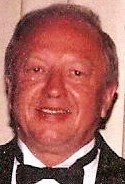
Almost as controversial as the proposed Park51 Islamic community center two blocks north of Ground Zero is the man behind the project, Imam Feisal Abdul Rauf. Opponents of the "Ground Zero mosque" are building a case that Rauf is a "cynically brilliant" Islamic extremist in sheep's clothing, while supporters call him and fellow Park51 organizers "the kind of Muslim leaders right-wing commentators fantasize about: modernists and moderates who openly condemn the death cult of al Qaeda and its adherents." Who is the real Rauf? (Listen to some of Imam Rauf's controversial comments)
What's his background?
Born in Kuwait in 1948, Rauf has lived in New York since 1965, and has a physics degree from Columbia. He's been imam of Masjid al-Farah, a Sufi mosque in New York City's TriBeCa neighborhood, since 1983. Rauf has written three books on Islam and how it fits into Western society. He's married to his second wife, Daisy Khan.
Was he raised Sufi?
No. His father, Muhammad Abdul Rauf, was a more conservative Sunni Muslim who, with the support of Egypt, taught and studied at universities and mosques outside the Middle East. The elder Rauf moved his family around to England, Malaysia, and then the U.S. The exposure to different religions and Islamic traditions led Feisal to shift to the more moderate and mystical Sufi Islam.
What was Rauf best known for before the Park51 controversy?
Since the 1990s he has been heavily involved in interfaith dialogue with Christian and Jewish leaders, and has founded two nonprofits focused on building bridges between American Muslims, U.S. society, and the Muslim world: The American Society for Muslim Advancement (1997) and the Cordoba Initiative (2003). After 9/11, Rauf did sensitivity training for the FBI and has gone on four U.S.-sponsored speaking tours to the Mideast since 2007 to discuss how Islam meshes with American religious pluralism.
What's the case for him being a "stealth" extremist?
Critics say his peace-and-brotherhood talk covers up support for Palestinian suicide bombers, Iran's repressive Islamic government, radical Muslim clerics, and the imposition of Sharia law in the West. To support these charges, his detractors cite Rauf's refusal to call Hamas a terrorist group and his equating of certain U.S. actions with Islamic terrorism. The Cordoba Initiative and its Park51 project aren't about dialogue, critics say, but rather about proselytizing and spreading Islam.
Is the case persuasive?
Though a few of Rauf's speeches contain some jarring notes (see quotes below), those who have known him for a long time are surprised by the allegations. "To stereotype him as an extremist is just nuts," says the Very Rev. James P. Morton, longtime dean of the Church of St. John the Divine.
Showing posts with label history. Show all posts
Showing posts with label history. Show all posts
Wednesday, August 25, 2010


Friday, July 9, 2010
An ex-Romanian ally of the KGB says the premature exposure and exchange of Russian spies in the U.S. was "a huge mistake"
...yesterday, the U.S. intelligence community lost a unique chance to learn what was behind Russia's current illegal operations. It is a huge mistake to have wasted this opportunity by rushing to exchange the ten illegals for, among others, a Russian who was framed as a spy (and does not want to leave Russia). There is nothing in this exchange for the United States. We should have first learned what we can from the ten illegals, before starting to think about exchanging them. Even the infamous Abel was not exchanged until five years after he was sentenced. And he was exchanged for an American who had made history for the U.S.
POST-SOVIET RUSSIA has been transformed in unprecedented positive ways. The barriers the Soviets spent over 70 years erecting between themselves and the rest of the world, as well as between individual Russians, are slowly coming down. Russian culture is reviving, and the country is developing a new national identity.
In 2000, however, some of my former colleagues in the KGB, which instrumented the Cold War, took over the Kremlin at the end of a palace coup and instituted what seems to be the first intelligence dictatorship in history. During the Soviet Union, the KGB, which killed off some twenty million people, was a state within the state. Now the KGB is the state. Over 6,000 former KGB officers are running Russia's federal and local governments, and they are also managing the country's oil and natural gas industries, which were renationalized.
On February 12, 2004, Russia's new tsar, Vladimir Putin, declared the demise of the Soviet Union a "national tragedy on an enormous scale." We kept quiet. In July 2007, he predicted a new Cold War against the West. We kept quiet. "War has started," Putin announced on August 8, 2008, minutes after Russian tanks crossed into the pro-Western country of Georgia. We kept quiet. But the remarkable number of Russian illegal officers identified inside the U.S. strongly suggests that the Kremlin is indeed engaged in a new Cold War against us.
POST-SOVIET RUSSIA has been transformed in unprecedented positive ways. The barriers the Soviets spent over 70 years erecting between themselves and the rest of the world, as well as between individual Russians, are slowly coming down. Russian culture is reviving, and the country is developing a new national identity.
In 2000, however, some of my former colleagues in the KGB, which instrumented the Cold War, took over the Kremlin at the end of a palace coup and instituted what seems to be the first intelligence dictatorship in history. During the Soviet Union, the KGB, which killed off some twenty million people, was a state within the state. Now the KGB is the state. Over 6,000 former KGB officers are running Russia's federal and local governments, and they are also managing the country's oil and natural gas industries, which were renationalized.
On February 12, 2004, Russia's new tsar, Vladimir Putin, declared the demise of the Soviet Union a "national tragedy on an enormous scale." We kept quiet. In July 2007, he predicted a new Cold War against the West. We kept quiet. "War has started," Putin announced on August 8, 2008, minutes after Russian tanks crossed into the pro-Western country of Georgia. We kept quiet. But the remarkable number of Russian illegal officers identified inside the U.S. strongly suggests that the Kremlin is indeed engaged in a new Cold War against us.
Sunday, October 11, 2009
Nobel has been "captive to the politics of the time"
19th century dynamite magnate Alfred Nobel envisioned the Peace Prize that bears his name as honoring those "who shall have done the most or the best work for fraternity between nations." But the Norwegian Nobel Prize Committee, which Friday named President Barack Obama as the 2009 laureate, has throughout its history been captive to the politics of the time.
Past Winners
In October 1989, for example, with China's Tiananmen Square uprising still fresh, the committee announced it was awarding the prize to Beijing's nemesis, the Dalai Lama, spiritual leader of the Tibetan people. It was, ostensibly, recognition of the Dalai Lama's struggle against more than 30 years of Chinese occupation -- but also a slap at Beijing.
"The Norwegians know they have the opportunity to influence world opinion twice a year" -- when they announce the prize and when they award it, said Scott London, co-author of a new book on Nobel lectures with his historian grandfather, Irwin Abrams. "And they want to make the most of it."
Such early laureates as Mr. Nobel's friend Baroness Bertha von Suttner were activists in idealistic, if ineffectual, peace groups. "It is erroneous to believe that the future will of necessity continue the trends of the past and the present," the baroness said in her 1905 acceptance speech, four years after the first prize was given and nine years before the start of World War I.
President Theodore Roosevelt, who received the 1906 prize for his mediation of the Russo-Japanese war, was the first person with political power to be tapped. Gunnar Knudsen, president of the Norwegian parliament, praised Mr. Roosevelt's "happy role in bringing to an end the bloody war."
Mr. Roosevelt was hardly a pacifist. He had earned his stripes as an enthusiastic cavalry commander fighting Spanish troops in Cuba. Some argued the Norwegians chose Mr. Roosevelt to curry favor with the U.S.
Past Winners
In October 1989, for example, with China's Tiananmen Square uprising still fresh, the committee announced it was awarding the prize to Beijing's nemesis, the Dalai Lama, spiritual leader of the Tibetan people. It was, ostensibly, recognition of the Dalai Lama's struggle against more than 30 years of Chinese occupation -- but also a slap at Beijing.
"The Norwegians know they have the opportunity to influence world opinion twice a year" -- when they announce the prize and when they award it, said Scott London, co-author of a new book on Nobel lectures with his historian grandfather, Irwin Abrams. "And they want to make the most of it."
Such early laureates as Mr. Nobel's friend Baroness Bertha von Suttner were activists in idealistic, if ineffectual, peace groups. "It is erroneous to believe that the future will of necessity continue the trends of the past and the present," the baroness said in her 1905 acceptance speech, four years after the first prize was given and nine years before the start of World War I.
President Theodore Roosevelt, who received the 1906 prize for his mediation of the Russo-Japanese war, was the first person with political power to be tapped. Gunnar Knudsen, president of the Norwegian parliament, praised Mr. Roosevelt's "happy role in bringing to an end the bloody war."
Mr. Roosevelt was hardly a pacifist. He had earned his stripes as an enthusiastic cavalry commander fighting Spanish troops in Cuba. Some argued the Norwegians chose Mr. Roosevelt to curry favor with the U.S.
Monday, August 10, 2009
Detroit celebrates a poor symbol, Joe Louis's fist
"On the plaza in front of the Detroit municipal building is a huge bronze replica of Joe Louis’ fist and arm, as if to say: “Here is a city ruled by brawn.” Brawn counts for very little in the modern world. The earnest redevelopers who hoped to renew Detroit by razing its history instead destroyed the raw materials out of which urban renaissance has come to so so many other American downtowns. A couple of days after I returned from Detroit, I telephoned a friend who had lived and worked in the city for many years. My friend, it’s relevant to mention, is the son of an Irish cop, ardently Catholic and defiantly conservative. Why did Chicago recover and Detroit fail, I asked. What doomed the city? He thought for a moment. “Not enough gays.”
Detroit confirms the lessons taught by Jane Jacobs and Russell Kirk. Preservation is as vital to urban health as renovation. Indeed, they are inseparable. The preservation of the old incubates the new.
It’s a lesson with application not only to Detroit’s past, but its future. The great factory complexes along the Detroit River have shuttered. America no longer manufactures here. Some will want to rip the factories down. Leave them be – leave them for now as monuments and memorials of the achievements of the past; leave them for the future, when somebody will want them. Want them for what? Who can say? Who in 1950 could ever have imagined London’s Docklands converted into condominums? Who would have guessed that New York’s emptied toolshops would provide some of the city’s most coveted office space? The 22nd century will put the artifacts of the 20th to equally unsurmisable uses, if only we permit it. Cities can molder for a century or more, and then reawaken to a new era that rediscovers something of value in the detritus of an earlier time. Brooklyn did. So did Miami Beach. Ditto Boston and Charleston – and even more spectacularly, Dublin and Prague. The promise of renaissance may yet come true, even for the ghost city of Detroit."
Detroit confirms the lessons taught by Jane Jacobs and Russell Kirk. Preservation is as vital to urban health as renovation. Indeed, they are inseparable. The preservation of the old incubates the new.
It’s a lesson with application not only to Detroit’s past, but its future. The great factory complexes along the Detroit River have shuttered. America no longer manufactures here. Some will want to rip the factories down. Leave them be – leave them for now as monuments and memorials of the achievements of the past; leave them for the future, when somebody will want them. Want them for what? Who can say? Who in 1950 could ever have imagined London’s Docklands converted into condominums? Who would have guessed that New York’s emptied toolshops would provide some of the city’s most coveted office space? The 22nd century will put the artifacts of the 20th to equally unsurmisable uses, if only we permit it. Cities can molder for a century or more, and then reawaken to a new era that rediscovers something of value in the detritus of an earlier time. Brooklyn did. So did Miami Beach. Ditto Boston and Charleston – and even more spectacularly, Dublin and Prague. The promise of renaissance may yet come true, even for the ghost city of Detroit."
Subscribe to:
Posts (Atom)