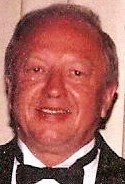
'The brazen nature of this administration is undermining the basic rule of law, the confidence of the public, and taking away states' authority—creating an ever stronger federal government. My role is to make clear we're not going to put up with this."
So says Bill McCollum, Florida's attorney general, now vying to be governor of the Sunshine State. It wasn't so very long ago that the job of a Republican governor was to promise lower spending, policies to encourage job growth, freedom in education, tax relief.
In the age of Obama, Republican governors and candidates are redefining their role to become defenders in chief against an overweening federal government that is siphoning away states' power and crushing them with new costs.
That's why 20 states are suing for the constitutional overthrow of ObamaCare. It's why Louisiana Gov. Bobby Jindal threw in with a lawsuit to kill the federal drilling moratorium. It's why Arizona Gov. Jan Brewer is challenging federal immigration policies. It's why 18 governors in March signed a letter demanding the Senate protect their states against EPA climate rules.
Democratic governors, too, have felt compelled to protect their citizens. The EPA letter was signed by West Virginia's Joe Manchin and Kentucky's Steve Beshear. Oklahoma's Brad Henry is scoring the administration for its "net neutrality" policies. Montana's Brian Schweitzer and Wyoming's Dave Freudenthal both signed laws curtailing federal power over firearms.
Showing posts with label Florida. Show all posts
Showing posts with label Florida. Show all posts
Friday, August 6, 2010


Monday, July 26, 2010
After fumbling oil spill, White House tries to control backlash
ST. PETERSBURG, Fla. — The White House has quietly launched an effort to confront the political backlash along the Gulf Coast over its handling of the BP oil spill — giving special attention to Florida, the only state in the region President Barack Obama won in 2008 and one he will need again when he runs for reelection in 2012.
The White House dispatched political and communications aides to the Gulf Coast states on July 12, with Alabama and Mississippi receiving one each, sources familiar with the effort said. Some aides went to Louisiana, while Florida received four.
That battleground state will be a heavy lift. In interviews conducted along the coast, Florida Democrats accused the administration of largely ignoring their calls and letters and complained of a White House that’s out of touch.
Alex Sink, Florida’s chief financial officer and the state’s presumptive Democratic gubernatorial nominee, even characterized Vice President Joe Biden’s recent visit to the state as “a screw-up,” saying she was “embarrassed” by his speech.
“It was just so off target and out of touch with the reality of what’s going on over there,” Sink said in an interview at the Florida Democratic Party headquarters in Tallahassee.
It’s the type of criticism the White House wants to avoid. The administration aides in Florida function similarly to a campaign. They do rapid response and media coordination, and they report back to senior aides in the West Wing in nearly real time about what they’re hearing on the ground.
The effort came about after the White House grew concerned over political damage from not having a permanent presence in the Gulf Coast states. Obama’s top advisers summoned a small group of young former campaign staffers working in the administration to the White House for a meeting, said a source with knowledge of the meeting. No one mentioned 2012 specifically, but it was clear the administration’s approach to the oil spill had the potential to hurt the president’s reelection campaign and that the issue required more hands-on attention.
“Someone recognized that all we were doing was playing defense,” said an administration official. The aides were sent to the Gulf Coast five days after the meeting.
The White House dispatched political and communications aides to the Gulf Coast states on July 12, with Alabama and Mississippi receiving one each, sources familiar with the effort said. Some aides went to Louisiana, while Florida received four.
That battleground state will be a heavy lift. In interviews conducted along the coast, Florida Democrats accused the administration of largely ignoring their calls and letters and complained of a White House that’s out of touch.
Alex Sink, Florida’s chief financial officer and the state’s presumptive Democratic gubernatorial nominee, even characterized Vice President Joe Biden’s recent visit to the state as “a screw-up,” saying she was “embarrassed” by his speech.
“It was just so off target and out of touch with the reality of what’s going on over there,” Sink said in an interview at the Florida Democratic Party headquarters in Tallahassee.
It’s the type of criticism the White House wants to avoid. The administration aides in Florida function similarly to a campaign. They do rapid response and media coordination, and they report back to senior aides in the West Wing in nearly real time about what they’re hearing on the ground.
The effort came about after the White House grew concerned over political damage from not having a permanent presence in the Gulf Coast states. Obama’s top advisers summoned a small group of young former campaign staffers working in the administration to the White House for a meeting, said a source with knowledge of the meeting. No one mentioned 2012 specifically, but it was clear the administration’s approach to the oil spill had the potential to hurt the president’s reelection campaign and that the issue required more hands-on attention.
“Someone recognized that all we were doing was playing defense,” said an administration official. The aides were sent to the Gulf Coast five days after the meeting.
Wednesday, February 17, 2010
Marco Rubio goes national
On February 26, conservative Marco Rubio, former Speaker of the Florida House of Representatives, and Republican candidate for U.S. Senate, will be in Southern California for a series of fundraisers in San Diego, Orange County, and Los Angeles.
Speaker Rubio has become a national cause for conservatives, as well as Tea Party activists, in what has been characterized as a battle for the future of the GOP. His Republican primary opponent is Governor Charlie Crist, who after leading in polls by as much as 37% after his announcement, now trails Rubio by 14%.
Speaker Rubio has become a national cause for conservatives, as well as Tea Party activists, in what has been characterized as a battle for the future of the GOP. His Republican primary opponent is Governor Charlie Crist, who after leading in polls by as much as 37% after his announcement, now trails Rubio by 14%.
Subscribe to:
Posts (Atom)