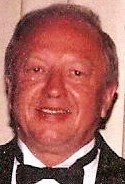
Suffering the consequences of protecting outlaws, a renowned sanctuary state is considering enacting measures to combat illegal immigration after an undocumented alien awaiting deportation murdered two people this week.
The killings in a small, working class Massachusetts city have shaken legislators in a state that has long protected illegal immigrants. The triggerman (Fernando Guerrero-Lara) had been freed by federal authorities while he waited for a March 2011 deportation hearing in Texas, according to a news report that referred to his crimes as a bullet bloodbath.
Guerrero-Lara and a second triggerman crashed a packed birthday party at a restaurant in Lawrence, located about 25 miles north of Boston, and killed a pair of 24-year-olds, one of them a mother of two young children. Local authorities were indignant when they learned that Immigration and Customs Enforcement (ICE) had allowed Guerrero-Lara to roam the country while awaiting removal. Not surprisingly, ICE has refused to explain why the illegal immigrant was not in custody.
This miserable failure to enforce immigration laws is nothing new for the feds, which is why local governments—such as Arizona and Hazleton Pennsylvania—across the nation are taking matters into their own hands. Cities, counties and states—like Massachusetts—that offer illegal immigrants sanctuary only add to the growing crisis, which includes shielding terrorists.
For instance, the Pakistani man (So Pir Khan) arrested earlier this year for Time Square bombing was an illegal immigrant with deep roots in Massachusetts. He even admitted on a city cabbie license application that he entered the U.S. illegally. The Boston cab driver is one of three men who funneled money to the fellow Pakistani terrorist (Faisal Shahzad) who tried to blow up New York’s Time Square with a series of bombs hidden in a sports utility vehicle.
Showing posts with label Massachusetts. Show all posts
Showing posts with label Massachusetts. Show all posts
Monday, September 13, 2010


Monday, July 19, 2010
In 4 years of Romneycare, Massachusetts' health care costs have risen fast and are gobbling a growing share of the state budget
Emergency rooms remain as crowded as ever; about a third of the non-elderly go at least once a year, and half their visits involve "non-emergency conditions." As for improvements in health, most probably lie in the future. "Many of the uninsured were young and healthy," writes Long. Their "expected gains in health status" would be mostly long-term. Finally -- and most important -- health costs continue to soar.
Aside from squeezing take-home pay (employers provide almost 70 percent of insurance), higher costs have automatically shifted government priorities toward health care and away from everything else -- schools, police, roads, prisons, lower taxes. In 1990, health spending represented about 16 percent of the state budget, says the Massachusetts Taxpayers Foundation. By 2000, health's share was 22 percent. In 2010, it's 35 percent. About 90 percent of the health spending is Medicaid.
State leaders have proven powerless to control these costs. Facing a tough re-election campaign, Gov. Deval Patrick effectively ordered his insurance commissioner to reject premium increases for small employers (50 workers or less) and individuals -- an unprecedented step. Commissioner Joseph Murphy then disallowed premium increases ranging from 7 percent to 34 percent. The insurers appealed; hearing examiners ruled Murphy's action illegal. Murphy has now settled with one insurer allowing premium increases, he says, of 7 percent to 11 percent. More settlements are expected.
Aside from squeezing take-home pay (employers provide almost 70 percent of insurance), higher costs have automatically shifted government priorities toward health care and away from everything else -- schools, police, roads, prisons, lower taxes. In 1990, health spending represented about 16 percent of the state budget, says the Massachusetts Taxpayers Foundation. By 2000, health's share was 22 percent. In 2010, it's 35 percent. About 90 percent of the health spending is Medicaid.
State leaders have proven powerless to control these costs. Facing a tough re-election campaign, Gov. Deval Patrick effectively ordered his insurance commissioner to reject premium increases for small employers (50 workers or less) and individuals -- an unprecedented step. Commissioner Joseph Murphy then disallowed premium increases ranging from 7 percent to 34 percent. The insurers appealed; hearing examiners ruled Murphy's action illegal. Murphy has now settled with one insurer allowing premium increases, he says, of 7 percent to 11 percent. More settlements are expected.
Wednesday, July 7, 2010
In Massachusetts, the petrie dish for Obamacare, health care is dominated by politics and grows more dysfunctional by the day
President Obama said earlier this year that the health-care bill that Congress passed three months ago is "essentially identical" to the Massachusetts universal coverage plan that then-Gov. Mitt Romney signed into law in 2006. No one but Mr. Romney disagrees.
As events are now unfolding, the Massachusetts plan couldn't be a more damning indictment of ObamaCare. The state's universal health-care prototype is growing more dysfunctional by the day, which is the inevitable result of a health system dominated by politics.
In the first good news in months, a state appeals board has reversed some of the price controls on the insurance industry that Gov. Deval Patrick imposed earlier this year. Late last month, the panel ruled that the action had no legal basis and ignored "economic realties."
In April, Mr. Patrick's insurance commissioner had rejected 235 of 274 premium increases state insurers had submitted for approval for individuals and small businesses. The carriers said these increases were necessary to cover their expected claims over the coming year, as underlying state health costs continue to rise at 8% annually. By inventing an arbitrary rate cap, the administration was in effect ordering the carriers to sell their products at a loss.
Mr. Patrick has promised to appeal the panel's decision and find some other reason to cap rates. Yet a raft of internal documents recently leaked to the press shows this squeeze play was opposed even within his own administration.
In an April message to his staff, Robert Dynan, a career insurance commissioner responsible for ensuring the solvency of state carriers, wrote that his superiors "implemented artificial price caps on HMO rates. The rates, by design, have no actuarial support. This action was taken against my objections and without including me in the conversation."
Mr. Dynan added that "The current course . . . has the potential for catastrophic consequences including irreversible damage to our non-profit health care system" and that "there most likely will be a train wreck (or perhaps several train wrecks)."
Sure enough, the five major state insurers have so far collectively lost $116 million due to the rate cap. Three of them are now under administrative oversight because of concerns about their financial viability.
As events are now unfolding, the Massachusetts plan couldn't be a more damning indictment of ObamaCare. The state's universal health-care prototype is growing more dysfunctional by the day, which is the inevitable result of a health system dominated by politics.
In the first good news in months, a state appeals board has reversed some of the price controls on the insurance industry that Gov. Deval Patrick imposed earlier this year. Late last month, the panel ruled that the action had no legal basis and ignored "economic realties."
In April, Mr. Patrick's insurance commissioner had rejected 235 of 274 premium increases state insurers had submitted for approval for individuals and small businesses. The carriers said these increases were necessary to cover their expected claims over the coming year, as underlying state health costs continue to rise at 8% annually. By inventing an arbitrary rate cap, the administration was in effect ordering the carriers to sell their products at a loss.
Mr. Patrick has promised to appeal the panel's decision and find some other reason to cap rates. Yet a raft of internal documents recently leaked to the press shows this squeeze play was opposed even within his own administration.
In an April message to his staff, Robert Dynan, a career insurance commissioner responsible for ensuring the solvency of state carriers, wrote that his superiors "implemented artificial price caps on HMO rates. The rates, by design, have no actuarial support. This action was taken against my objections and without including me in the conversation."
Mr. Dynan added that "The current course . . . has the potential for catastrophic consequences including irreversible damage to our non-profit health care system" and that "there most likely will be a train wreck (or perhaps several train wrecks)."
Sure enough, the five major state insurers have so far collectively lost $116 million due to the rate cap. Three of them are now under administrative oversight because of concerns about their financial viability.
Friday, May 21, 2010
Rasmussen traces an "unequivocal public repudiation of the agenda" of Obama and "a seismic shift" in thought about change
It began last November in statewide races in Virginia and New Jersey. Then it swept through Massachusetts in a stunning U.S. Senate special election this January. Most recently, it has spilled over into primary battles in Utah, Kentucky and Pennsylvania – growing more potent as the calendar year advances toward a climactic November 2010 showdown.
“It” is the ongoing, unequivocal public repudiation of the agenda of President Barack Obama – a seismic shift in the thinking of the American electorate regarding the sort of “change” they want for their country. In several races “it” is also a direct rejection of Obama himself – as evidenced by the deaf ear voters turned to his personal appeals on behalf of Massachusetts’ Attorney General Martha Coakley and party-switching Pennsylvania Sen. Arlen Specter.
Both Coakley and Specter enjoyed commanding leads over their opponents prior to Obama’s active engagement in their races, with Specter enjoying a 21-point cushion over Democratic Rep. Joe Sestak as recently as last month (Sestak ended up defeating Specter by a 54-46 percent margin). Similarly, Sen. Scott Brown trailed Coakley by 17 points just two weeks before pulling off his improbable five-point upset victory.
In both races, Obama appeared in radio and television ads on behalf of the losing candidates – and in the Massachusetts race he paid a last-minute visit to the Bay State in an unsuccessful effort to rally Coakley’s faltering campaign (similar to his failed last-ditch effort to revive the flagging candidacy of New Jersey Gov. Jon Corzine).
There was no eleventh hour visit for Specter – but only because Obama’s political advisors read the handwriting on the wall and were desperate to avoid yet another embarrassing image of their boss with his arms draped around another losing candidate. Accordingly, after pledging to give Specter his “full support,” when Election Day rolled around Obama was nowhere to be found – and wasn’t even following the race “all that closely,” according to his spokesman.
How’s that for loyalty?
Also worth noting was the tremendous shot in the arm that Sestak’s campaign received when he revealed that the Obama administration (in typical “Chicagoland” fashion) offered him a high-paying federal job in exchange for dropping his primary challenge against Specter – a charge which has yet to be properly investigated, but which served as a turning point in the race.
Meanwhile, halfway across the country in Kentucky another repudiation of Obama was taking place – albeit one that rattled the cages of a completely different set of Washington insiders. There, Kentucky ophthalmologist Rand Paul – son of Texas Congressman Ron Paul – trounced establishment Republican Trey Grayson in a race that demonstrated the growing political clout of the Tea Party movement.
Paul defeated the GOP’s hand-picked candidate by a 24 percent margin – even after Grayson received endorsements from Senate Minority Leader Mitch McConnell, former New York Mayor Rudy Giuliani and former Vice-President Dick Cheney. Similar to Obama’s last-minute shunning of Specter, McConnell also fled the scene of his anointed candidate’s downfall – ostensibly to attend to “Washington business.”
Paul’s win was the second demonstration of Tea Party power in as many weeks, coming on the heels of Utah Republicans’ refusal to re-nominate incumbent U.S. Senator Bob Bennett. Additionally, ten other U.S. Senators and twenty U.S. Representatives are retiring from politics in advance of the 2010 elections.
What’s fueling this “wave?”
“It” is the ongoing, unequivocal public repudiation of the agenda of President Barack Obama – a seismic shift in the thinking of the American electorate regarding the sort of “change” they want for their country. In several races “it” is also a direct rejection of Obama himself – as evidenced by the deaf ear voters turned to his personal appeals on behalf of Massachusetts’ Attorney General Martha Coakley and party-switching Pennsylvania Sen. Arlen Specter.
Both Coakley and Specter enjoyed commanding leads over their opponents prior to Obama’s active engagement in their races, with Specter enjoying a 21-point cushion over Democratic Rep. Joe Sestak as recently as last month (Sestak ended up defeating Specter by a 54-46 percent margin). Similarly, Sen. Scott Brown trailed Coakley by 17 points just two weeks before pulling off his improbable five-point upset victory.
In both races, Obama appeared in radio and television ads on behalf of the losing candidates – and in the Massachusetts race he paid a last-minute visit to the Bay State in an unsuccessful effort to rally Coakley’s faltering campaign (similar to his failed last-ditch effort to revive the flagging candidacy of New Jersey Gov. Jon Corzine).
There was no eleventh hour visit for Specter – but only because Obama’s political advisors read the handwriting on the wall and were desperate to avoid yet another embarrassing image of their boss with his arms draped around another losing candidate. Accordingly, after pledging to give Specter his “full support,” when Election Day rolled around Obama was nowhere to be found – and wasn’t even following the race “all that closely,” according to his spokesman.
How’s that for loyalty?
Also worth noting was the tremendous shot in the arm that Sestak’s campaign received when he revealed that the Obama administration (in typical “Chicagoland” fashion) offered him a high-paying federal job in exchange for dropping his primary challenge against Specter – a charge which has yet to be properly investigated, but which served as a turning point in the race.
Meanwhile, halfway across the country in Kentucky another repudiation of Obama was taking place – albeit one that rattled the cages of a completely different set of Washington insiders. There, Kentucky ophthalmologist Rand Paul – son of Texas Congressman Ron Paul – trounced establishment Republican Trey Grayson in a race that demonstrated the growing political clout of the Tea Party movement.
Paul defeated the GOP’s hand-picked candidate by a 24 percent margin – even after Grayson received endorsements from Senate Minority Leader Mitch McConnell, former New York Mayor Rudy Giuliani and former Vice-President Dick Cheney. Similar to Obama’s last-minute shunning of Specter, McConnell also fled the scene of his anointed candidate’s downfall – ostensibly to attend to “Washington business.”
Paul’s win was the second demonstration of Tea Party power in as many weeks, coming on the heels of Utah Republicans’ refusal to re-nominate incumbent U.S. Senator Bob Bennett. Additionally, ten other U.S. Senators and twenty U.S. Representatives are retiring from politics in advance of the 2010 elections.
What’s fueling this “wave?”
Friday, May 7, 2010
Massachusetts patients are demonstrating that the individual health care mandate can be gamed
Democrats claim their newly passed health insurance reform, signed in March by President Obama, will eventually provide coverage for more than 30 million uninsured people. Don't bet on it.
The key to achieving that goal, Democrats argue—along with expanding Medicaid and subsidies for buying coverage—is the individual mandate, which requires individuals to have health insurance or pay a fine. The mandate is supposed to push nearly everyone into the pool, to minimize free-riding on the system.
But what if millions of Americans decide it's a better deal to pay the fine and remain uninsured until they need coverage?
It appears that's exactly what's happening in Massachusetts, which passed its own Obamacare-like reform with an individual mandate in 2006.
Last year Charles Baker, former CEO of Harvard Pilgrim Health Care, one of Massachusetts's largest health plans, noticed some health insurance brokers posting comments on his widely read blog. They expressed suspicions that people were applying for health coverage after a medical condition developed, got the care they needed, and then dropped the coverage.
Coverage for an individual, noted Mr. Baker, now a Republican candidate for governor, might be $2,000 to $3,000 a year, whereas the penalty was only about $900. He asked his finance people to see whether they could find any discernible patterns.
Boy, did they.
Between April 2008 and March 2009, 40 percent of the individuals who applied to Harvard Pilgrim stayed covered for less than five months. Yet claims were averaging about $2,400 a month, about six times what one would expect.
The key to achieving that goal, Democrats argue—along with expanding Medicaid and subsidies for buying coverage—is the individual mandate, which requires individuals to have health insurance or pay a fine. The mandate is supposed to push nearly everyone into the pool, to minimize free-riding on the system.
But what if millions of Americans decide it's a better deal to pay the fine and remain uninsured until they need coverage?
It appears that's exactly what's happening in Massachusetts, which passed its own Obamacare-like reform with an individual mandate in 2006.
Last year Charles Baker, former CEO of Harvard Pilgrim Health Care, one of Massachusetts's largest health plans, noticed some health insurance brokers posting comments on his widely read blog. They expressed suspicions that people were applying for health coverage after a medical condition developed, got the care they needed, and then dropped the coverage.
Coverage for an individual, noted Mr. Baker, now a Republican candidate for governor, might be $2,000 to $3,000 a year, whereas the penalty was only about $900. He asked his finance people to see whether they could find any discernible patterns.
Boy, did they.
Between April 2008 and March 2009, 40 percent of the individuals who applied to Harvard Pilgrim stayed covered for less than five months. Yet claims were averaging about $2,400 a month, about six times what one would expect.
Friday, April 16, 2010
Cato goes after Romney on Massachusetts plan
An influential conservative think tank is firing a broadside at ex-MA Gov. Mitt Romney (R), criticizing the potential WH'12 contender for a health care plan they say looks identical to Pres. Obama's.
"When you run down this list of elements in the Obama plan and the Romney plan, they are all identical," says Michael Cannon, the Cato Institute's director of Health Policy Studies, in a new video running on the group's website. "Both the Romney plan and the Obama plan are essentially a government takeover of the health care sector of the economy."
Romney's signature achievement during his tenure in the Bay State, CommonwealthCare, has now become a serious liability for a potential WH'12 bid. Romney's approach was controversial among think tank conservatives then; now, with the spotlight on health care, some are convinced it will be a deal-breaker.
"As Pres. Obama himself has pointed out, Romney is the guy who created the prototype for Obamacare," said Cato executive VP David Boaz. "How can he lead the charge against a health care plan that is modeled on his own?"
Romney has pushed back hard, dismissing comparisons between the 2 plans as inaccurate.
"Pres. Obama has tried to compare Gov. Romney's plan to his own but there are important differences. Gov. Romney's plan is different because it didn't include a tax increase, and it didn't cut care to seniors, and most importantly, it is based on the premise that states should be free to pursue their own healthcare solutions," said Eric Fehrnstrom, a senior advisor to Romney's Free and Strong America PAC.
"Under Gov. Romney, Massachusetts solved the problem of the uninsured without raising taxes. Other states are free to copy what he did, or improve on it, or chart their own course, but we should reject a federal one-size-fits-all plan," Fehrstrom added.
My take:
The first graf of this piece insinuates that Massachusetts copied, or borrowed heavily from, Obamacare. In fact, Massachusetts enacted its plan several years ago. Congress enacted Obamacare this year.
There's another slant to this story that intrigues me. Perhaps Obama's handlers tailored Obamacare after the Massachusetts plan so as to make a presidential run by Romney difficult, if not impossible. If so, their scheme has succeeded. While Romney has survived his difficulty to this point, and still appears to be a viable candidate, that could change when the presidential primary campaign heats up and his rivals go after him.
This theory assumes more intelligence and skill than I believe the Obama team possesses, but it is plausible.
To see a video of the Cato attack on Romney, go here: http://www.cato.org/pressroom.php
"When you run down this list of elements in the Obama plan and the Romney plan, they are all identical," says Michael Cannon, the Cato Institute's director of Health Policy Studies, in a new video running on the group's website. "Both the Romney plan and the Obama plan are essentially a government takeover of the health care sector of the economy."
Romney's signature achievement during his tenure in the Bay State, CommonwealthCare, has now become a serious liability for a potential WH'12 bid. Romney's approach was controversial among think tank conservatives then; now, with the spotlight on health care, some are convinced it will be a deal-breaker.
"As Pres. Obama himself has pointed out, Romney is the guy who created the prototype for Obamacare," said Cato executive VP David Boaz. "How can he lead the charge against a health care plan that is modeled on his own?"
Romney has pushed back hard, dismissing comparisons between the 2 plans as inaccurate.
"Pres. Obama has tried to compare Gov. Romney's plan to his own but there are important differences. Gov. Romney's plan is different because it didn't include a tax increase, and it didn't cut care to seniors, and most importantly, it is based on the premise that states should be free to pursue their own healthcare solutions," said Eric Fehrnstrom, a senior advisor to Romney's Free and Strong America PAC.
"Under Gov. Romney, Massachusetts solved the problem of the uninsured without raising taxes. Other states are free to copy what he did, or improve on it, or chart their own course, but we should reject a federal one-size-fits-all plan," Fehrstrom added.
My take:
The first graf of this piece insinuates that Massachusetts copied, or borrowed heavily from, Obamacare. In fact, Massachusetts enacted its plan several years ago. Congress enacted Obamacare this year.
There's another slant to this story that intrigues me. Perhaps Obama's handlers tailored Obamacare after the Massachusetts plan so as to make a presidential run by Romney difficult, if not impossible. If so, their scheme has succeeded. While Romney has survived his difficulty to this point, and still appears to be a viable candidate, that could change when the presidential primary campaign heats up and his rivals go after him.
This theory assumes more intelligence and skill than I believe the Obama team possesses, but it is plausible.
To see a video of the Cato attack on Romney, go here: http://www.cato.org/pressroom.php
Thursday, April 8, 2010
What could go wrong when progressive bureaucrats regulate health insurance rates?
ObamaCare has created a high-risk game that will likely end in disaster.
Last week's news out of Maine and Massachusetts offers an unappetizing foretaste of the destructive rate battles that will plague the implementation of ObamaCare at the national level. These two progressive states have long championed the extended coverage formulas that figure front and center in ObamaCare. Quite predictably, both states are now feeling the financial crunch. Caught between a rock and a hard place, their insurance commissioners have decided to shoot the messenger by turning down requested rate increases sought by major health care insurers.
These rates were rejected as "excessive" in bad economic times because it was deemed inappropriate to allow these companies to earn any profit. Maine's insurance commissioner, Mila Kofman, followed the recommendation of Maine Attorney General Janet Mills to limit the large insurer Anthem ( ATH - news - people ) by a premium increase of 10.9%, not the 18.5% that it had requested. The drama played out roughly the same way in Massachusetts, where Gov. Deval Patrick's insurance commission blocked 235 of the 274 requested increases, thereby forcing insurance carriers to renew coverage at today's losing rates until the matter is resolved in court.
Last week's news out of Maine and Massachusetts offers an unappetizing foretaste of the destructive rate battles that will plague the implementation of ObamaCare at the national level. These two progressive states have long championed the extended coverage formulas that figure front and center in ObamaCare. Quite predictably, both states are now feeling the financial crunch. Caught between a rock and a hard place, their insurance commissioners have decided to shoot the messenger by turning down requested rate increases sought by major health care insurers.
These rates were rejected as "excessive" in bad economic times because it was deemed inappropriate to allow these companies to earn any profit. Maine's insurance commissioner, Mila Kofman, followed the recommendation of Maine Attorney General Janet Mills to limit the large insurer Anthem ( ATH - news - people ) by a premium increase of 10.9%, not the 18.5% that it had requested. The drama played out roughly the same way in Massachusetts, where Gov. Deval Patrick's insurance commission blocked 235 of the 274 requested increases, thereby forcing insurance carriers to renew coverage at today's losing rates until the matter is resolved in court.
Tuesday, April 6, 2010
How Mitt Romney can get out of his political box
Memo to Mitt Romney:
You and your campaign staff undoubtedly are trying to figure out how you can get out of the political box in which you find yourself. As governor of Massachusetts, you sponsored a health care reform that bears some similarities to Obamacare. How can you win the Republican presidential nomination when Obamacare is reviled by most Americans and is likely to be the most powerful argument against the Democrats in the November election?
Here's how:
1. Focus on the process, not the result. Obamacare was bought and paid for by the Obama administration. Money that belonged to all Americans was used to bribe members of Congress to vote for a bill that most Americans opposed. Even so, Obamacare was enacted with minimum Congressional support.
Romneycare, on the other hand, started out as your bill, but was embraced by Massachusetts legislators from both parties and had little opposition. The record is rife with statements of bipartisan praise. Use them.
2. Why did you propose the reform? Because Massachusetts businesses were forking over $1 billion a year to the state to finance medical care for the uninsured. This was driving up the costs, and worsening the competitive standing, of Massachusetts businesses. A significant slice of the Massachusetts economy is made up of health-related businesses. You did not want to see their prospects damaged by their support for the uninsured.
It is in your interest to keep attention focused on these two matters because a big majority of Americans perceive the Obamacare enactment as unacceptable at best, and unconstitutional at worst.
You and your campaign staff undoubtedly are trying to figure out how you can get out of the political box in which you find yourself. As governor of Massachusetts, you sponsored a health care reform that bears some similarities to Obamacare. How can you win the Republican presidential nomination when Obamacare is reviled by most Americans and is likely to be the most powerful argument against the Democrats in the November election?
Here's how:
1. Focus on the process, not the result. Obamacare was bought and paid for by the Obama administration. Money that belonged to all Americans was used to bribe members of Congress to vote for a bill that most Americans opposed. Even so, Obamacare was enacted with minimum Congressional support.
Romneycare, on the other hand, started out as your bill, but was embraced by Massachusetts legislators from both parties and had little opposition. The record is rife with statements of bipartisan praise. Use them.
2. Why did you propose the reform? Because Massachusetts businesses were forking over $1 billion a year to the state to finance medical care for the uninsured. This was driving up the costs, and worsening the competitive standing, of Massachusetts businesses. A significant slice of the Massachusetts economy is made up of health-related businesses. You did not want to see their prospects damaged by their support for the uninsured.
It is in your interest to keep attention focused on these two matters because a big majority of Americans perceive the Obamacare enactment as unacceptable at best, and unconstitutional at worst.
Saturday, April 3, 2010
Romney can escape from his box only by finessing health care reform; this is a promising start
MITT ROMNEY’S latest position on the Massachusetts health care reform law is, finally, an honest one. “Overall, ours is a model that works,’’ the former Bay State governor and would-be presidential candidate said in Iowa.
But, as Romney also notes, it’s a work in progress and needs fiscal fine-tuning.
That’s different from demonizing it.
Tim Cahill, the Massachusetts state treasurer who is running for governor as an independent, made national headlines by proclaiming that health reform is bankrupting the state. This mantra was happily picked up by opponents of the recently enacted federal health care reform law, which used Massachusetts as a template.
Asked to respond to Cahill’s dire conclusion, Romney, via spokesman Eric Fehrnstrom, replied, “It is irresponsible to say it is bankrupting the state, as Tim Cahill claims.’’
Romney, who has been for health care reform and against it, now appears to be for it, at least in its Massachusetts incarnation. There’s still a lot of contorting going on, as he embraces states’ rights and tries to finesse the controversial issue with his Republican base.
But at least he is also celebrating the core goal of universal health care — getting insurance coverage to virtually all Massachusetts citizens — which he helped the Bay State achieve. As he does, he points out a legitimate challenge: how to make sure it remains economically viable.
“I don’t pretend for a minute that our system is perfect,’’ he said recently. “I think it’s better than what we had, and I think people can learn from what we have done and I think there are changes I would make to it.’’
But, as Romney also notes, it’s a work in progress and needs fiscal fine-tuning.
That’s different from demonizing it.
Tim Cahill, the Massachusetts state treasurer who is running for governor as an independent, made national headlines by proclaiming that health reform is bankrupting the state. This mantra was happily picked up by opponents of the recently enacted federal health care reform law, which used Massachusetts as a template.
Asked to respond to Cahill’s dire conclusion, Romney, via spokesman Eric Fehrnstrom, replied, “It is irresponsible to say it is bankrupting the state, as Tim Cahill claims.’’
Romney, who has been for health care reform and against it, now appears to be for it, at least in its Massachusetts incarnation. There’s still a lot of contorting going on, as he embraces states’ rights and tries to finesse the controversial issue with his Republican base.
But at least he is also celebrating the core goal of universal health care — getting insurance coverage to virtually all Massachusetts citizens — which he helped the Bay State achieve. As he does, he points out a legitimate challenge: how to make sure it remains economically viable.
“I don’t pretend for a minute that our system is perfect,’’ he said recently. “I think it’s better than what we had, and I think people can learn from what we have done and I think there are changes I would make to it.’’
Thursday, March 25, 2010
Public attacks against Obamacare jeopardize prospects of Romney, who pioneered similar plan
As the public outcry against Obamacare proceeds, Mitt Romney's chances of capturing the Republican presidential nomination in 2012 are going aglimmering.
Perhaps that was the reason President Barack Obama and congressional Democrats pushed the health care reform so vigorously and quickly. They not only have accomplished their top legislative objective, but also have hobbled the man who was potentially their most dangerous challenger.
In any case, the Republicans are now in a box. Romney appears to be a frontrunner for the nomination, but Republican leaders, elected officials and voters are in full-throated outcry against an Obama health care reform that bears strong similarities to the one Romney initiated as governor of Massachusetts.
This complicates matters. If the Republicans nominate Romney in 2012, they open themselves to criticism that their attacks against Obamacare were phony. If they reject Romney to duck the hypocrisy charge, they may have passed up their best chance to beat Obama.
Romney is, after all, a very successful investor who grew rich and famous by rescuing things of value from the boneyards of corporate America, while also rescuing the flailing Salt Lake City Winter Olympics. Unless the Obama administration changes course, that is precisely the kind of leader the United States will need after the current wrecking crew leaves Washington.
The irony is that, in requiring all Massachusetts residents to have health insurance, the state's political class was hoping to provide a model for the rest of the country. At the time, the state's businesses were paying approximately $1 billion a year to subsidize the health care costs of the uninsured.
When the bipartisan health care measure was enacted, with almost unanimous legislative support, in 2006, Massachusetts House Speaker Sal DiMasi compared it to the Mayflower Compact that the pilgrims wrote after they landed on Plymouth Rock in 1620.
That was then. This is now.
What are the odds that the Republicans will nominate Romney if that would rob them of the issue that has riled much of the country and may still be hot two years from now?
Perhaps that was the reason President Barack Obama and congressional Democrats pushed the health care reform so vigorously and quickly. They not only have accomplished their top legislative objective, but also have hobbled the man who was potentially their most dangerous challenger.
In any case, the Republicans are now in a box. Romney appears to be a frontrunner for the nomination, but Republican leaders, elected officials and voters are in full-throated outcry against an Obama health care reform that bears strong similarities to the one Romney initiated as governor of Massachusetts.
This complicates matters. If the Republicans nominate Romney in 2012, they open themselves to criticism that their attacks against Obamacare were phony. If they reject Romney to duck the hypocrisy charge, they may have passed up their best chance to beat Obama.
Romney is, after all, a very successful investor who grew rich and famous by rescuing things of value from the boneyards of corporate America, while also rescuing the flailing Salt Lake City Winter Olympics. Unless the Obama administration changes course, that is precisely the kind of leader the United States will need after the current wrecking crew leaves Washington.
The irony is that, in requiring all Massachusetts residents to have health insurance, the state's political class was hoping to provide a model for the rest of the country. At the time, the state's businesses were paying approximately $1 billion a year to subsidize the health care costs of the uninsured.
When the bipartisan health care measure was enacted, with almost unanimous legislative support, in 2006, Massachusetts House Speaker Sal DiMasi compared it to the Mayflower Compact that the pilgrims wrote after they landed on Plymouth Rock in 1620.
That was then. This is now.
What are the odds that the Republicans will nominate Romney if that would rob them of the issue that has riled much of the country and may still be hot two years from now?
Subscribe to:
Posts (Atom)