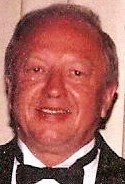
MOST OF THE PORTRAITS are penned in acid, and a delightful liquid it is. Chou En-lai: "He reminded me of an old-fashioned nonconformist clergyman, in his black clothes, discreet, seemingly humble manner, and clasped hands." Julius Nyerere, late president of Tanzania: "the first of the great black African humbugs." Jawaharlal Nehru: "shifty, inconsistent, mendacious, and hypocritical." Picasso: "He did more harm to art than all the Goths and Vandals, the Puritan iconoclasts and the totalitarian thugs combined." Bertrand Russell: "a clever man, devoid of wisdom and with poor judgment." Robert Maxwell: "the only man I ever met who genuinely radiated evil." (Obviously Johnson never met the recently deceased Robert Strange McNamara.) There is an unforgettable portrait of E. M. Forster on the steps of the Reform Club -- "the epitome of the Man in the Dirty Raincoat."
Perhaps the anecdote worth reproducing at greatest length concerns the publisher Frank Pakenham, Lord Longford. One of his lordship's interests was a campaign against pornography. The committee he formed to advance his cause included, remarkably enough, Kingsley Amis and Elizabeth Jane Howard.
He was once proceeding down Harley Street [Johnson writes] with a large suitcase full of pornographic material, when the cord holding the disreputable bag together snapped, and its contents fell all over the pavement. A lady phoned the police, saying, "A scruffy old man is selling dirty books outside my house." A policeman duly came up to Frank, who was trying to stuff the magazines back in his case. "'Ullo, sir, who are you and what might you be doing?" "My name is Lord Longford and this is my homework." "Is that so, sir, and you would please step this way to the station with your wares and we will sort it all out."
Johnson claims that he was taught to write by the iconoclastic historian A. J. P. Taylor, who told him to keep his sentences short. "Just occasionally put a longer one. Strong verbs. Few adjectives. Forget about adverbs, unless essential to the meaning. Short quotations, if any. Beware of subjunctives....All writing is a series of tricks...the great thing is to master all the best tricks of others, then invent some of your own." And, Taylor, added, "always work hard. Nothing is ever accomplished without a lot of sheer hard work." He obviously followed this counsel, and two generations of readers are the richer for it.
Showing posts with label Paul Johnson. Show all posts
Showing posts with label Paul Johnson. Show all posts
Tuesday, September 14, 2010


Saturday, June 12, 2010
Paul Johnson explains how global warming evolved from unproven theory to an industry that supports tens of thousands
When I was an undergraduate the philosopher I studied most carefully was Karl Popper, especially his writings on the evaluation of evidence and criteria to distinguish a genuine scientific theory from a false one. He made two key points. First, a theory must include the falsifiability principle. It must be susceptible to empirical tests and, if it fails to meet them, be scrapped. He gave as an example of a genuine theory Einstein's General Relativity of 1915. Einstein insisted that it must survive three practical tests, and if it failed any one of them be dropped as untrue. In fact it passed triumphantly all three, beginning in 1919, and many other since.
Popper argued that prima facie evidence of a bogus theory was the practice of altering or enlarging it, by its authors, to accommodate new evidence since its original formulation. This, he argued, had happened in the case of Marxism and, still more, Freudianism. Scientific theories, he argued, must be very precise and scientific to be of any use. Marxism and Freudianism were just portmanteau notions into which virtually any kind of phenomena could be made to fit. Hence Marxism led to political and economic disaster areas like the Soviet Union, and Freudianism to a stupendous waste of time and money.
It is a pity Popper did not live to see that Global Warming fit perfectly into his model of a pseudo-theory. It is vaguely and imprecisely formulated. It fails the falsifiability test, because all new evidence is made to fit by enlarging the theory. When originally formulated in the 1980s, Global Warming produced by man-made emissions would lead, it was argued, to much higher temperatures and desiccation. There would be a huge drop in rainfall and an imperative need to build seawater desalination plants. I recall an unusually dry summer (1987) in the English Lake District, normally rainy, was triumphantly presented as "absolute proof" of the theory. This autumn, the Lake District had an unusually wet spell, culminating in floods that engulfed the delightful town of Cockermouth, where Wordsworth was born. This was pounced upon by Global Warming "experts" as "absolute proof" of their theory, and paraded as such in Copenhagen.
The fact is that the theory has now been expanded to include any unusual form of weather, anywhere. Hot summers, warm winters -- global warming. Cold weather at an unusual time of year -- global warming. Drought, storms, floods -- global warming. No snow on the ski slopes, sudden snow, out of season snow, very heavy snow -- global warming. Of course in countries like Japan or the UK, where unusual, unpredictable, and tiresomely variable weather is the norm (it was first commented on in the UK by the Venerable Bede in the eighth century), the public does not swallow global warming, and polls show majorities of 55 to 60 percent reject it.
Of course vested interests accept it. It is regarded as a splendid way of damaging the American economy, by the same kind of left-wing intellectuals who supported the Club of Rome in the 1960s, which argued that world resources were on the brink of exhaustion. It is a form of pantheism and a useful emotional outlet for people who have renounced Judeo-Christianity. If someone is anti-American, left-liberal, and atheist, it is virtually certain he (or even she: women are notoriously more skeptical about it than men are) is a Global Warmer.
THEN AGAIN, GLOBAL WARMING NOW HAS a powerful, worldwide institutional substructure. If a media outlet has an environment correspondent, or a university a Department of Climate Studies, or a government a Ministry of Global Warming, those involved are certain to be not just believers but fanatical propagandists for the cause. Their livelihood depends on it. I calculate that the lobby now includes over 20,000 full-time, well-paid professionals whose entire life is spent in pushing "proofs." The existence of this enormous phalanx of well-placed, articulate enthusiasts has inevitably led to the capture of powerful institutions -- in Britain, for instance, the Meteorological Office, the Royal Society, and the BBC, together with many universities and newspapers. It used to be supposed that scientists, or those calling themselves such, were incorruptible and guided purely by genuine convictions based on objective evidence. But scientists behave just like politicians if the pressure and prizes make it worth their while to conform.
So vast sums of money will continue to be spent on an unproven and unprovable theory, predicting a global catastrophe from the realms of fantasy. The money could be much more profitably spent on space exploration. This is a genuine science and could turn out to be useful, even vital.
Popper argued that prima facie evidence of a bogus theory was the practice of altering or enlarging it, by its authors, to accommodate new evidence since its original formulation. This, he argued, had happened in the case of Marxism and, still more, Freudianism. Scientific theories, he argued, must be very precise and scientific to be of any use. Marxism and Freudianism were just portmanteau notions into which virtually any kind of phenomena could be made to fit. Hence Marxism led to political and economic disaster areas like the Soviet Union, and Freudianism to a stupendous waste of time and money.
It is a pity Popper did not live to see that Global Warming fit perfectly into his model of a pseudo-theory. It is vaguely and imprecisely formulated. It fails the falsifiability test, because all new evidence is made to fit by enlarging the theory. When originally formulated in the 1980s, Global Warming produced by man-made emissions would lead, it was argued, to much higher temperatures and desiccation. There would be a huge drop in rainfall and an imperative need to build seawater desalination plants. I recall an unusually dry summer (1987) in the English Lake District, normally rainy, was triumphantly presented as "absolute proof" of the theory. This autumn, the Lake District had an unusually wet spell, culminating in floods that engulfed the delightful town of Cockermouth, where Wordsworth was born. This was pounced upon by Global Warming "experts" as "absolute proof" of their theory, and paraded as such in Copenhagen.
The fact is that the theory has now been expanded to include any unusual form of weather, anywhere. Hot summers, warm winters -- global warming. Cold weather at an unusual time of year -- global warming. Drought, storms, floods -- global warming. No snow on the ski slopes, sudden snow, out of season snow, very heavy snow -- global warming. Of course in countries like Japan or the UK, where unusual, unpredictable, and tiresomely variable weather is the norm (it was first commented on in the UK by the Venerable Bede in the eighth century), the public does not swallow global warming, and polls show majorities of 55 to 60 percent reject it.
Of course vested interests accept it. It is regarded as a splendid way of damaging the American economy, by the same kind of left-wing intellectuals who supported the Club of Rome in the 1960s, which argued that world resources were on the brink of exhaustion. It is a form of pantheism and a useful emotional outlet for people who have renounced Judeo-Christianity. If someone is anti-American, left-liberal, and atheist, it is virtually certain he (or even she: women are notoriously more skeptical about it than men are) is a Global Warmer.
THEN AGAIN, GLOBAL WARMING NOW HAS a powerful, worldwide institutional substructure. If a media outlet has an environment correspondent, or a university a Department of Climate Studies, or a government a Ministry of Global Warming, those involved are certain to be not just believers but fanatical propagandists for the cause. Their livelihood depends on it. I calculate that the lobby now includes over 20,000 full-time, well-paid professionals whose entire life is spent in pushing "proofs." The existence of this enormous phalanx of well-placed, articulate enthusiasts has inevitably led to the capture of powerful institutions -- in Britain, for instance, the Meteorological Office, the Royal Society, and the BBC, together with many universities and newspapers. It used to be supposed that scientists, or those calling themselves such, were incorruptible and guided purely by genuine convictions based on objective evidence. But scientists behave just like politicians if the pressure and prizes make it worth their while to conform.
So vast sums of money will continue to be spent on an unproven and unprovable theory, predicting a global catastrophe from the realms of fantasy. The money could be much more profitably spent on space exploration. This is a genuine science and could turn out to be useful, even vital.
Wednesday, April 14, 2010
Historian Paul Johnson on the necessity of listening
...a leader must know the truth, however awful, even if--in wartime, for instance--he cannot divulge it. Winston Churchill blamed himself for not knowing--because he did not take the necessary steps to find out--the extent of Singapore's military weakness. The ignominious fall of that military base to the Japanese in 1942 came as one of the biggest shocks in the history of the British Empire.
Not knowing is often the result of not listening to those who do know. If Mr. Obama were to listen harder, not just occasionally but as a matter of ingrained habit, he'd have no illusions about what his health care plan is going to cost or the ramifications of those costs for individuals and the economy.
Not knowing is often the result of not listening to those who do know. If Mr. Obama were to listen harder, not just occasionally but as a matter of ingrained habit, he'd have no illusions about what his health care plan is going to cost or the ramifications of those costs for individuals and the economy.
Friday, November 27, 2009
Obama pioneers a bold tactic in negotiations: when the adversary's argument blows up, concede
So, on the heels of a dramatic exposure of the scientfic fraud that has fueled the global warming hoax, hoax-master Al Gore salutes President Obama for pioneering a new American stance on the issue.
How did Obama do that? By announcing that he would be in Copenhagen on Dec. 9 to offer U.S. concessions. The U.S. will curb carbon emissions by 17 % from 2006 levels by 2020.
This will be the first time the U.S. has offered such concessions, which would raise the cost of doing business in the U.S., make U.S. manufacturers less competitive in international markets, and blaze a new trail in the annals of negotiation tactics. The new rule will read as follows: "As soon as your opponent's argument has been blown up beyond retrieval, concede to his demands."
Never mind that no other nation will follow the lead of the U.S. We will have won a place in the hearts of our nonfriends and enemies, and that's what counts. After all, the obvious goal of President Obama is to downsize America's role and standing in the world. Hobbling American business and the economy will do that.
This demonstrates, once again, that leftist certitudes never die; they just are reworked to fit altered environments. Even when yes becomes no, leftists seldom lose a step.
How can they pull this off?
Practice. Practice. Practice.
The godfather of modern leftist collectivism, in all its forms, is Karl Marx, a German intellectual who moved to England early in the industrial revolution. In 1848, he authored the Communist Manifesto, which explored in detail the miserable conditions of England's workers and theorized that the abused workers would eventually rise up and take control of the factories.
From this base, they would capture control of the government as well.
Over ths ensuing 161 years, this never happened anywhere in the world.
In semi-feudal Russia, in 1917, anti-czarists murdered Czar Nicholas II and his family, creating a power vacuum that was filled by expatriate intellectual Vladimir Lenin and motley associates who eventually set up a communist regime.
In China, Communists won a civil war.
Eastern Europe fell into the communist sphere through occupation by Russia.
In Cuba, Fidel Castro and his ragtag communist army overthrew the hated Batista regime.
in Korea, the United Nations fenced off the north, a Chinese sphere of influence, to enable journalists to deploy the phrase "lunatic leader" as often as they liked.
Nowhere did the workers rise up and seize control of a country, as Marx had envisaged.
To top it off, British historian Paul Johnson made an amazing discovery. Having carved out a niche through his exposure of the lies, distortions and depravities of famous intellectuals, Johnson searched for evidence that Marx had ever set foot in a factory.
He found none. So, Marx has his chapter in Johnson's book, "Intellectuals," along with Percy Shelley, Henrik Ibsen, Leon Tolstoy, Ernest Hemingway, Bertolt Brecht, Bertrand Russell, Jean-Paul Sartre and Edmund Wilson.
Although Marxist theory failed utterly in the real world, it captured huge swaths in the worlds of theory and theology.
Few, if any, university departments of economics, political science and history have escaped Marxist inluence. In some English departments, literature now plays second fiddle to leftist politics. Whole new departments, featuring courses like postmodern studies, ethnic studies and women's studies have sprung up since the 1950s. David Horowitz has come up with a useful rule of thumb: any course name with the word "studies" in it should be regarded with suspicion.
Most, if not all, of those courses shared a purpose, which was to train students to think of themselves as victims.
Not surprisingly, university professors have been among the leading table pounders for global warming.
Now, they have a dilemma. Alarmists have claimed for many years that manmade global warming was going on now. It wasn't, and isn't. The hysteria was based on faudulent science. It's time to back down.
In the real world, marxists can keep right on dreaming of the belated revolution of the workers. Marx didn't put a time limit on his theory.
Gore, who won his Nobel in 2007 for his excellent propaganda on climate change, said that Obama "took an important step" by announcing he would attend the Copenhagen talks on a new climate treaty. Why they need a new treaty is puzzling because hardly anyone paid any attention to the old one, which lies there in pristine condition.
Gore's words may signify a downshift in Democrat expectations. It used to be that Democrats celebrated when they passed a bill growing government and spending more money. Now, Gore is declaring victory on grounds Obama is taking another trip.
Bear in mind that Obama's concession, like Marx's prediction, is on the come.
How did Obama do that? By announcing that he would be in Copenhagen on Dec. 9 to offer U.S. concessions. The U.S. will curb carbon emissions by 17 % from 2006 levels by 2020.
This will be the first time the U.S. has offered such concessions, which would raise the cost of doing business in the U.S., make U.S. manufacturers less competitive in international markets, and blaze a new trail in the annals of negotiation tactics. The new rule will read as follows: "As soon as your opponent's argument has been blown up beyond retrieval, concede to his demands."
Never mind that no other nation will follow the lead of the U.S. We will have won a place in the hearts of our nonfriends and enemies, and that's what counts. After all, the obvious goal of President Obama is to downsize America's role and standing in the world. Hobbling American business and the economy will do that.
This demonstrates, once again, that leftist certitudes never die; they just are reworked to fit altered environments. Even when yes becomes no, leftists seldom lose a step.
How can they pull this off?
Practice. Practice. Practice.
The godfather of modern leftist collectivism, in all its forms, is Karl Marx, a German intellectual who moved to England early in the industrial revolution. In 1848, he authored the Communist Manifesto, which explored in detail the miserable conditions of England's workers and theorized that the abused workers would eventually rise up and take control of the factories.
From this base, they would capture control of the government as well.
Over ths ensuing 161 years, this never happened anywhere in the world.
In semi-feudal Russia, in 1917, anti-czarists murdered Czar Nicholas II and his family, creating a power vacuum that was filled by expatriate intellectual Vladimir Lenin and motley associates who eventually set up a communist regime.
In China, Communists won a civil war.
Eastern Europe fell into the communist sphere through occupation by Russia.
In Cuba, Fidel Castro and his ragtag communist army overthrew the hated Batista regime.
in Korea, the United Nations fenced off the north, a Chinese sphere of influence, to enable journalists to deploy the phrase "lunatic leader" as often as they liked.
Nowhere did the workers rise up and seize control of a country, as Marx had envisaged.
To top it off, British historian Paul Johnson made an amazing discovery. Having carved out a niche through his exposure of the lies, distortions and depravities of famous intellectuals, Johnson searched for evidence that Marx had ever set foot in a factory.
He found none. So, Marx has his chapter in Johnson's book, "Intellectuals," along with Percy Shelley, Henrik Ibsen, Leon Tolstoy, Ernest Hemingway, Bertolt Brecht, Bertrand Russell, Jean-Paul Sartre and Edmund Wilson.
Although Marxist theory failed utterly in the real world, it captured huge swaths in the worlds of theory and theology.
Few, if any, university departments of economics, political science and history have escaped Marxist inluence. In some English departments, literature now plays second fiddle to leftist politics. Whole new departments, featuring courses like postmodern studies, ethnic studies and women's studies have sprung up since the 1950s. David Horowitz has come up with a useful rule of thumb: any course name with the word "studies" in it should be regarded with suspicion.
Most, if not all, of those courses shared a purpose, which was to train students to think of themselves as victims.
Not surprisingly, university professors have been among the leading table pounders for global warming.
Now, they have a dilemma. Alarmists have claimed for many years that manmade global warming was going on now. It wasn't, and isn't. The hysteria was based on faudulent science. It's time to back down.
In the real world, marxists can keep right on dreaming of the belated revolution of the workers. Marx didn't put a time limit on his theory.
Gore, who won his Nobel in 2007 for his excellent propaganda on climate change, said that Obama "took an important step" by announcing he would attend the Copenhagen talks on a new climate treaty. Why they need a new treaty is puzzling because hardly anyone paid any attention to the old one, which lies there in pristine condition.
Gore's words may signify a downshift in Democrat expectations. It used to be that Democrats celebrated when they passed a bill growing government and spending more money. Now, Gore is declaring victory on grounds Obama is taking another trip.
Bear in mind that Obama's concession, like Marx's prediction, is on the come.
Wednesday, July 22, 2009
Obama bears some resemblance fo Karl Marx
Historian Paul Johnson, in a book titled simply, "Intellectuals," chronicled the failings, deceptions and depravities of a wide range of thinkers and writers, including Jean-Jacques Rousseau, whom he described as "an intersting madman;" Henrik Ibsen, Leo Tolstoy, Bertrand Russell and Lillian Hellman.
About one of his subjects, Karl Marx, Johnson made two pertinent observations:
"He was not interested in finding the truth but in proclaiming it."
"He believed, as his poetic imagination told him, that society was on the verge of collapse."
Don't these descriptions seem equally applicable to President Barack Obama?
About one of his subjects, Karl Marx, Johnson made two pertinent observations:
"He was not interested in finding the truth but in proclaiming it."
"He believed, as his poetic imagination told him, that society was on the verge of collapse."
Don't these descriptions seem equally applicable to President Barack Obama?
Subscribe to:
Posts (Atom)