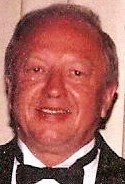
Two Census Bureau managers from a Brooklyn field office were fired after their bosses found they faked household surveys to meet deadlines, the Daily News learned.
Instead of pounding the pavement and knocking on doors, the corner-cutting people-counters mined the phone book and Internet to make up answers to questionnaires, regional director Tony Farthing said.
The managers - turned in by whistleblower employees - were caught last week. Now, at least 10,000 surveys need to be done or redone, officials said.
Census officials in Washington only admitted to a string of incomplete forms and poor tracking in disclosing the firings Friday afternoon. But Farthing corroborated worker accounts to the Daily News that managers Alvin Aviles and Sonya Merritt began dummying up responses in the final crush to finish the surveys, which field workers are supposed to compile from in-person household visits.
"Basically, people were being asked to forge [questionnaires]," said one worker in the North East Brooklyn office, which covers 95,000 households.
"We went in and did a full investigation," Farthing said. "We found out two managers on the weekend of the 12th of June cheated by using phone books or Internet sources."
A worker told the Daily News that when field interviewers returned to the office with blank forms, Aviles also enlisted some of them in the scheme. "He had people fill them in," the worker said.
Aviles and Merritt could not immediately be reached for comment.
Farthing said he believes the branch's earlier work is kosher, but the pair decided to break the rules at crunch time when they were looking at a huge stack of unfinished surveys, and their bosses were pushing for results, even if it meant more night work.
"We were telling them to go back on all non-interviews and hit this stuff hard. None of this 9-to-5 stuff, go when they know someone will be home," Farthing said. It was then, Farthing said, that the managers "came up with the bright idea, or not-so-bright idea" - to save time.
The Census bureau was not able to estimate how much it will cost to redo all the work, but a spokesman said it was not an issue because the bureau was under budget on the massive project. Farthing said the honest workers left in the office are redoing 5,000 or so interviews that may be tainted.
Showing posts with label U.S. Census. Show all posts
Showing posts with label U.S. Census. Show all posts
Saturday, June 26, 2010


Friday, June 4, 2010
Columnist John Crudele goes to war against census director
Now, it's war!
The director of the US Census, which is spending more than $11 billion of taxpayer money, told some members of Congress that my recent columns about employment abuses by his organization are wrong.
Those columns quoted numerous workers saying that the Census was hiring people, then subjecting them to arbitrary firings after which they would be inexplicably rehired.
Lots of Census workers from around the country made these claims in e-mails to me.
Workers are also alleging that they are paid to train for positions but then given far less time on the job than promised. When they are told their jobs have been completed, others are then paid to train for the positions the original workers just vacated.
But Robert M. Groves, director of the Census, defended his organization's hiring practices.
"First, we do not hire, then fire, then rehire anyone. Any employee who is fired is fired for cause," Groves wrote in a letter to Congresswoman Carolyn B. Maloney and other members of the House Joint Economic Committee.
Congress apparently questioned Groves about what I've been documenting. Groves should have said "I'll investigate," instead of issuing an outright denial. OK, I'll ignore the fact that Groves carelessly uses the word "anyone" in his defense to Congress.
But since the director seems so clueless about his own organization, I decided to send some of the e-mails I received to Maloney's office, including the one below, which I'm editing and condensing for space reasons.
The director of the US Census, which is spending more than $11 billion of taxpayer money, told some members of Congress that my recent columns about employment abuses by his organization are wrong.
Those columns quoted numerous workers saying that the Census was hiring people, then subjecting them to arbitrary firings after which they would be inexplicably rehired.
Lots of Census workers from around the country made these claims in e-mails to me.
Workers are also alleging that they are paid to train for positions but then given far less time on the job than promised. When they are told their jobs have been completed, others are then paid to train for the positions the original workers just vacated.
But Robert M. Groves, director of the Census, defended his organization's hiring practices.
"First, we do not hire, then fire, then rehire anyone. Any employee who is fired is fired for cause," Groves wrote in a letter to Congresswoman Carolyn B. Maloney and other members of the House Joint Economic Committee.
Congress apparently questioned Groves about what I've been documenting. Groves should have said "I'll investigate," instead of issuing an outright denial. OK, I'll ignore the fact that Groves carelessly uses the word "anyone" in his defense to Congress.
But since the director seems so clueless about his own organization, I decided to send some of the e-mails I received to Maloney's office, including the one below, which I'm editing and condensing for space reasons.
Sunday, May 30, 2010
LA Times: Census should stop counting illegal immigrants as citizens because it adds power to states that shield illegals
Official political innumeracy, enshrined in the census, steals our democracy. We count illegal immigrants the same as citizens and assign states congressional seats accordingly. This awards some states more representatives than they deserve. The census should, instead, count citizens separately, and Congress should reapportion representatives only on the basis of citizen populations. That would ensure that the votes of citizens in all parts of the country are as nearly equal as possible.
Although this largely unrecognized problem doesn't garner headlines, the failure to fix the census may have greater consequences as our political realities change. The unpleasantness in Arizona since it passed a tough immigration law is a likely prelude to infinitely more divisive conflicts.
The Constitution contains a mandate for a census. One of its stated objectives is to enable the proper apportionment of representation, state by state, in the House of Representatives. From the start, however, apportionment has been a mangled affair, a stain on our claim to be a true and fair representative democracy.
The deal worked out in Philadelphia in 1787 counted slaves as three-fifths of a person, even though they could not vote. The third U.S. Congress, meeting from 1793 to 1795, relied on the census of 1790 to apportion its 106 House members. Southern slave states were overrepresented by 10 seats as a result, after applying the three-fifths rule. No one even pretended that the slaves who accounted for those extra seats had any representation at all. The long-term consequences of such unfairness proved catastrophic.
Although this largely unrecognized problem doesn't garner headlines, the failure to fix the census may have greater consequences as our political realities change. The unpleasantness in Arizona since it passed a tough immigration law is a likely prelude to infinitely more divisive conflicts.
The Constitution contains a mandate for a census. One of its stated objectives is to enable the proper apportionment of representation, state by state, in the House of Representatives. From the start, however, apportionment has been a mangled affair, a stain on our claim to be a true and fair representative democracy.
The deal worked out in Philadelphia in 1787 counted slaves as three-fifths of a person, even though they could not vote. The third U.S. Congress, meeting from 1793 to 1795, relied on the census of 1790 to apportion its 106 House members. Southern slave states were overrepresented by 10 seats as a result, after applying the three-fifths rule. No one even pretended that the slaves who accounted for those extra seats had any representation at all. The long-term consequences of such unfairness proved catastrophic.
Subscribe to:
Posts (Atom)