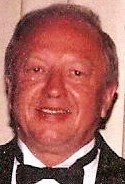
Drive them crazy. That's what Glenn Beck seems to specialize in doing, whether the "them" at issue is fellow radio hosts, fellow tv hosts, or, now, professors at universities. This last group is opening its own front in the war against the television king. An associate professor, Joseph Palermo of California State/Sacramento, took to the Huffington Post to mock the broadcaster as "Glenn Beck, Ph.D." I personally noticed this since Professor Palermo mentioned me by name, in tandem with author Jonah Goldberg, as an effort to "misinform" the gullible.
The rage at first seems odd, coming from professors. Why should these serene Yodas care what a man on television bellows? Yet they are on the warpath. The academic fury is at first directed at interpretation. Mr. Beck's explanation of how the Framers viewed religion, Mr. Beck's depiction of how Franklin Roosevelt's policy affected the Great Depression; Mr. Beck's argument that regulation is currently curtailing liberty in general -- all fall short in academic eyes. Prof. Palermo, for example, calls Mr. Beck's views as "stupid and false." But the real issue, the reason professors are on the attack, is not specific content. It is rather the professional and, in the end, economic, threat that Mr. Beck represents. To academics, Mr. Beck is more dangerous than any other radio show host, and they know it.
To understand the nature of the Beck challenge, you have to recall that our system of higher education is a throwback to medieval economics: a guild. As in the classic guild, members require a lengthy period of training, with formal stages. To be in any way authoritative, a writer must have a Ph.D., a guild seal. Members of this guild have enormous discretion when it comes to the conferring of the seal - also typical. In the humanities and social sciences, Ph.D.s. and, it goes without saying, tenure-track posts -- are usually awarded to those not hostile to the master professors' views. For many decades top universities have been especially rigorous in this practice, with the result that it is difficult to find non-progressives with top credentials in the humanities. The guild demands much from its apprentices, graduate students, including dull work in obscure texts. Indeed it is proud of that obscurity, for it distinguishes academic work from, say, the easy popular histories on bookstore shelves or tv.
In the field of history, the guild also maintains a monopoly on education by generating curricula, syllabi, and, of course, a canon, a set list of texts for each period of the past. Of course the academic guild, generally on the progressive side, has made many concessions to conservatives or classical liberals. Professors have assigned the odd conservative book; they mentioned the opponents' arguments. But such offerings have generally been presented as an afterthought, secondary, less authoritative. Looking back at their education many adults saw through this pretense of fairness. They resented the guild monolith. Something was missing.
Enter Mr. Beck.
Showing posts with label progressivism. Show all posts
Showing posts with label progressivism. Show all posts
Saturday, June 5, 2010


Sunday, April 4, 2010
The "tyrannical ambition" behind Obamacare could be the "last gasp of the Progressive impulse"
...we have not yet entirely lost the American spirit. What happened at the town halls in August, what took place in Virginia, in New Jersey, and, most dramatically, in Massachusetts proves the contrary. Barack Obama and his minions are indeed persuaded that public sentiment does not matter. They could not care less that the citizens do not consent, and they believe that what they have done cannot be undone. “Yes, we can,” they chant. But the truth is they can’t, for they are wrong.
Never, in the history of the United States, has a political party dared, in the face of public opinion fully formed and fiercely adverse, to carry so ambitious a bill without a modicum of cover from the opposition. What the Democrats have done is a breathtaking expression of contempt not just for public sentiment as revealed in the polling data but also for the verdict handed down by the people of Massachusetts at the polls in January. What they have done would never have been attempted by Franklin Delano Roosevelt or Lyndon Baines Johnson, who had a healthy respect for public opinion. What Barack Obama calls the audacity of hope is reckless in the extreme.
...Abraham Lincoln was right when he wrote, “Public sentiment is everything. With public sentiment, nothing can fail; without it nothing can succeed.” What this means in the present circumstances cannot be overestimated. The Republicans, if they seize the occasion, will have the rapt attention of their compatriots. If they expose fully the tyrannical ambition at the heart of the healthcare bill, they not only can, they will prevail. All that they then have to do is to restate in contemporary terms what FDR said with an eye to Herbert Hoover and the business progressives of the 1920s and the early 1930s: that “a small group” of his fellow Americans was intent on concentrating “into their own hands an almost complete control over other people’s property, other people’s money, other people’s labor – other people’s lives,” for, as is perfectly obvious, that is precisely what Barack Obama and his minions are attempting to do.
This is, as Mark Steyn insists, a very dangerous time. In my judgment, however, it is also a time of almost unprecedented opportunity. We have options that have not been vouchsafed to the friends of liberty for more than sixty years. For, if the Republicans manage to articulate, on the basis of the Declaration of Independence and the Constitution, the rationale for limited government as that rationale is pertinent to the healthcare bill, they will at the same time have articulated the grounds for doing away with the administrative state, and everyone will recognize the consequences.
The larger danger – which I analyzed in detail in Montesquieu & the Logic of Liberty and in Soft Despotism, Democracy’s Drift – has never been that we Americans would succumb to socialism as a consequence of a coup d’état of the sort being attempted by Harry Reid, Nancy Pelosi, and their acolytes. The larger danger has always been what Tocqueville feared: that the citizens of liberal democratic republics would gradually and unobtrusively come to depend on centralized administration for help in every aspect of their lives. Our propensity to drift in the direction of obliviously surrendering our liberties one by one in search of a security that no government can really guarantee has always been where the greatest peril lay.
...I view Barack Obama as “one of the most consequential presidents in history,” but not for the same reasons. In my view, he and today’s Democratic Party represent the last gasp of the Progressive impulse. The tyranical ambition hidden at the heart of Progressivism’s quest for what Franklin Delano Roosevelt termed “rational administration” Barack Obama has made manifest; and to all with eyes to see, the danger that we have temporized with for nearly a century is now perfectly visible. As Obama himself has insisted in speech after speech, the moment in which we now live is a “defining moment.” What is required in what he calls “this defining moment” is what Abraham Lincoln once called “a new birth of freedom.” The period we just entered could be our finest hour.
Never, in the history of the United States, has a political party dared, in the face of public opinion fully formed and fiercely adverse, to carry so ambitious a bill without a modicum of cover from the opposition. What the Democrats have done is a breathtaking expression of contempt not just for public sentiment as revealed in the polling data but also for the verdict handed down by the people of Massachusetts at the polls in January. What they have done would never have been attempted by Franklin Delano Roosevelt or Lyndon Baines Johnson, who had a healthy respect for public opinion. What Barack Obama calls the audacity of hope is reckless in the extreme.
...Abraham Lincoln was right when he wrote, “Public sentiment is everything. With public sentiment, nothing can fail; without it nothing can succeed.” What this means in the present circumstances cannot be overestimated. The Republicans, if they seize the occasion, will have the rapt attention of their compatriots. If they expose fully the tyrannical ambition at the heart of the healthcare bill, they not only can, they will prevail. All that they then have to do is to restate in contemporary terms what FDR said with an eye to Herbert Hoover and the business progressives of the 1920s and the early 1930s: that “a small group” of his fellow Americans was intent on concentrating “into their own hands an almost complete control over other people’s property, other people’s money, other people’s labor – other people’s lives,” for, as is perfectly obvious, that is precisely what Barack Obama and his minions are attempting to do.
This is, as Mark Steyn insists, a very dangerous time. In my judgment, however, it is also a time of almost unprecedented opportunity. We have options that have not been vouchsafed to the friends of liberty for more than sixty years. For, if the Republicans manage to articulate, on the basis of the Declaration of Independence and the Constitution, the rationale for limited government as that rationale is pertinent to the healthcare bill, they will at the same time have articulated the grounds for doing away with the administrative state, and everyone will recognize the consequences.
The larger danger – which I analyzed in detail in Montesquieu & the Logic of Liberty and in Soft Despotism, Democracy’s Drift – has never been that we Americans would succumb to socialism as a consequence of a coup d’état of the sort being attempted by Harry Reid, Nancy Pelosi, and their acolytes. The larger danger has always been what Tocqueville feared: that the citizens of liberal democratic republics would gradually and unobtrusively come to depend on centralized administration for help in every aspect of their lives. Our propensity to drift in the direction of obliviously surrendering our liberties one by one in search of a security that no government can really guarantee has always been where the greatest peril lay.
...I view Barack Obama as “one of the most consequential presidents in history,” but not for the same reasons. In my view, he and today’s Democratic Party represent the last gasp of the Progressive impulse. The tyranical ambition hidden at the heart of Progressivism’s quest for what Franklin Delano Roosevelt termed “rational administration” Barack Obama has made manifest; and to all with eyes to see, the danger that we have temporized with for nearly a century is now perfectly visible. As Obama himself has insisted in speech after speech, the moment in which we now live is a “defining moment.” What is required in what he calls “this defining moment” is what Abraham Lincoln once called “a new birth of freedom.” The period we just entered could be our finest hour.
Wednesday, October 7, 2009
Progressivism is back; voters still don't like it
"...just as was the case with Wilson, Carter and Clinton, Obama blames selfish individuals or corporations for the problems he seeks to redress. Eighty-five percent of Americans are happy with their health care, and Obama blames greedy insurance companies for this huge failure, which he seeks to correct by taking over 16 percent of our economy.
The principal sin in politics is overreaching. Americans have in the past repeatedly voted for freedom and the supremacy of the individual over the state. It will happen again."
The principal sin in politics is overreaching. Americans have in the past repeatedly voted for freedom and the supremacy of the individual over the state. It will happen again."
Subscribe to:
Posts (Atom)