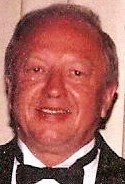
Donald Berwick, recess-appointed by President Obama to head Medicare and Medicaid, is a well-known advocate of health care rationing and admirer of Britain's National Health Service. Rising health costs and limited resources "require decisions about who will have access to care and the extent of their coverage," Berwick wrote in 1999. Last year, he said, "The decision is not whether or not we will ration care -- the decision is whether we will ration with our eyes open." Of the NHS, Berwick says simply, "I love it," adding that it is "one of the great human health care endeavors on earth."
As it turns out, Berwick himself does not have to deal with the anxieties created by limited access to care and the extent of coverage. In a special benefit conferred on him by the board of directors of the Institute for Health Care Improvement, a nonprofit health care charitable organization he created and which he served as chief executive officer, Berwick and his wife will have health coverage "from retirement until death."
The provision is deep inside a 2009 audit report on the nonprofit's finances. On page 17 of that document, there is a paragraph headlined "Post Retirement Health Benefits":
During fiscal year 2003, the Institute created a postretirement health benefit plan for its Chief Executive Officer (CEO). It provides the CEO and his spouse medical insurance from retirement until death. The present value of the estimated cost of this benefit is approximately $120,000, which is being accrued over the CEO's estimated remaining service period. The amount expensed by the Institute for the years ended 2009 and 2008 related to this liability was approximately $12,000 and $17,000, respectively. At 2009 and 2008, approximately $84,000 and $72,000, respectively, was included in accounts payable and accrued expenses.
Berwick was the CEO in question; under the provision, he and his wife will be covered for the rest of their lives -- a benefit that was on top of the $2.3 million in compensation the nonprofit gave Berwick in 2008, the $637,006 in compensation he received in 2007, and the $585,008 he received in 2006.
Showing posts with label Dr. Donald Berwick. Show all posts
Showing posts with label Dr. Donald Berwick. Show all posts
Wednesday, July 14, 2010


Thursday, July 8, 2010
Donald Berwick: Is he "America's worst nightmare?"
...the truth is -- as HUMAN EVENTS has been reporting -- (Donald) Berwick is America's worst nightmare when it comes to healthcare reform.
Obama’s recess appointment was clearly an effort to avoid public hearings on Berwick’s controversial views.
Here are the TopTen things the Obama Administration didn’t want you to know about Berwick:
1. Donald Berwick, President Obama's nominee to administer Medicare and Medicare, has stated openly that he favors rationing healthcare “with our eyes open.” He wants the government to be able to decide how much healthcare you and your family are entitled to.
2. Berwick believes for that healthcare to be effective we must redistribute wealth. “Any healthcare funding plan that is just, equitable, civilized and humane must, must redistribute wealth from the richer among us to the poorer and the less fortunate. Excellent healthcare is by definition redistributional,” said Berwick.
3. Berwick is “in love” with Britain’s National Heath Service. He called the British system -- that many here in the U.S. refer to as “free for all, but worthless to many” -- a “seductress” about which he is “romantic.”
In an op-ed published in the Washington Post in 1992 Berwick stated about Britain: “At last, a nation where healthcare is a right and carrying a semi-automatic machine gun is a privilege. Berwick also described a “utopian” future in which the government is in complete control of the healthcare system.
4. Berwick believes that ultrasounds in normal pregnancies and cesarean sections amount to an “assault” and wants to cut prenatal care programs.
“As many as 80% of hysterectomies are scientifically unnecessary, so are more than a quarter of the drugs used for ear infections, most of the ultrasounds done in normal pregnancies, and half of cesarean sections in the United States. Isn’t this, with all do respect, some form of assault and battery, however unintended,” said Berwick
5. Berwick has repeatedly expressed his support for a single-payer healthcare system. Berwick has stated that if he could “wave a wand…
* Healthcare is a common good – single payer, speaking and buying for the common good;
* Healthcare is a human right – universality is a non-negotiable starting place;
* Justice is a prerequisite to health –equity is a primary quality goal.”
6. Berwick will cut the number of cardiac centers, cancer-care centers, neonatal intensive-care units, and high-level trama centers.
7. Berwick doesn’t trust the free market. “Don't trust market forces,” instructs Berwick. Trust "leaders with plans."
“When you rely on incentives, market forces, competition, and upward reporting for excellence you are playing with fire. I believe it is better to rely instead whenever possible on spirit, purpose, learning cooperation and joy in work.”
8. Berwick will cut preventative care in cases such as mammograms and ultrasounds. “One over demanding service is prevention; annual physicals, screening tests, and other measures that supposedly help catch disease early,” said Berwick in a 1998 Institute for Healthcare Improvement publication.
9. On “End of Life Care,” Berwick stated in a 1993 speech that “only a minority of patients, families, and clinicians support prolonged use of life-sustaining procedures and dramatic interventions in the terminal states of illness, yet substantial use of these procedures continue.”
10. Berwick, highlights race as a factor in healthcare reform. "It’s still true that race, minority race, especially being black in our country, is the strongest critique that we have about health,” said Berwick.
Here are the TopTen things the Obama Administration didn’t want you to know about Berwick:
1. Donald Berwick, President Obama's nominee to administer Medicare and Medicare, has stated openly that he favors rationing healthcare “with our eyes open.” He wants the government to be able to decide how much healthcare you and your family are entitled to.
2. Berwick believes for that healthcare to be effective we must redistribute wealth. “Any healthcare funding plan that is just, equitable, civilized and humane must, must redistribute wealth from the richer among us to the poorer and the less fortunate. Excellent healthcare is by definition redistributional,” said Berwick.
3. Berwick is “in love” with Britain’s National Heath Service. He called the British system -- that many here in the U.S. refer to as “free for all, but worthless to many” -- a “seductress” about which he is “romantic.”
In an op-ed published in the Washington Post in 1992 Berwick stated about Britain: “At last, a nation where healthcare is a right and carrying a semi-automatic machine gun is a privilege. Berwick also described a “utopian” future in which the government is in complete control of the healthcare system.
4. Berwick believes that ultrasounds in normal pregnancies and cesarean sections amount to an “assault” and wants to cut prenatal care programs.
“As many as 80% of hysterectomies are scientifically unnecessary, so are more than a quarter of the drugs used for ear infections, most of the ultrasounds done in normal pregnancies, and half of cesarean sections in the United States. Isn’t this, with all do respect, some form of assault and battery, however unintended,” said Berwick
5. Berwick has repeatedly expressed his support for a single-payer healthcare system. Berwick has stated that if he could “wave a wand…
* Healthcare is a common good – single payer, speaking and buying for the common good;
* Healthcare is a human right – universality is a non-negotiable starting place;
* Justice is a prerequisite to health –equity is a primary quality goal.”
6. Berwick will cut the number of cardiac centers, cancer-care centers, neonatal intensive-care units, and high-level trama centers.
7. Berwick doesn’t trust the free market. “Don't trust market forces,” instructs Berwick. Trust "leaders with plans."
“When you rely on incentives, market forces, competition, and upward reporting for excellence you are playing with fire. I believe it is better to rely instead whenever possible on spirit, purpose, learning cooperation and joy in work.”
8. Berwick will cut preventative care in cases such as mammograms and ultrasounds. “One over demanding service is prevention; annual physicals, screening tests, and other measures that supposedly help catch disease early,” said Berwick in a 1998 Institute for Healthcare Improvement publication.
9. On “End of Life Care,” Berwick stated in a 1993 speech that “only a minority of patients, families, and clinicians support prolonged use of life-sustaining procedures and dramatic interventions in the terminal states of illness, yet substantial use of these procedures continue.”
10. Berwick, highlights race as a factor in healthcare reform. "It’s still true that race, minority race, especially being black in our country, is the strongest critique that we have about health,” said Berwick.
Sunday, May 30, 2010
Things to look forward to: hearings on confirmation, or rejection, of Dr. Death as director of Medicare-Medicaid
During the debate over ObamaCare, the bill's opponents were excoriated for talk of rationing and "death panels." And in fairness, with a few minor exceptions governing Medicare reimbursements, the law does not directly ration care or allow the government to dictate how doctors practice medicine.
But if President Obama wanted to keep a lid on that particular controversy, he just selected about the worst possible nominee for director of the Center for Medicare and Medicaid Services, the office that oversees government health care programs. Obama's pick, Dr. Donald Berwick, is an outspoken admirer of the British National Health Service and its rationing arm, the National Institute for Clinical Effectiveness (NICE).
"I am romantic about the National Health Service. I love it," Berwick said during a 2008 speech to British physicians, going on to call it "generous, hopeful, confident, joyous, and just." He compared the wonders of British health care to a U.S. system that he described as trapped in "the darkness of private enterprise."
As it becomes apparent that that ObamaCare is unsustainable, the calls for controlling its costs through rationing will grow louder.
Berwick was referring to a British health care system where 750,000 patients are awaiting admission to NHS hospitals. The government's official target for diagnostic testing was a wait of no more than 18 weeks by 2008. The reality doesn't come close. The latest estimates suggest that for most specialties, only 30 to 50 percent of patients are treated within 18 weeks. For trauma and orthopedics patients, the figure is only 20 percent.
Overall, more than half of British patients wait more than 18 weeks for care. Every year, 50,000 surgeries are canceled because patients become too sick on the waiting list to proceed.
The one thing the NHS is good at is saving money. After all, it is far cheaper to let the sick die than to provide care.
At the forefront of this cost-based rationing is NICE. It acts as a comparative-effectiveness tool for NHS, comparing various treatments and determining whether the benefits the patient receives, such as prolonged life, are cost-efficient for the government.
But if President Obama wanted to keep a lid on that particular controversy, he just selected about the worst possible nominee for director of the Center for Medicare and Medicaid Services, the office that oversees government health care programs. Obama's pick, Dr. Donald Berwick, is an outspoken admirer of the British National Health Service and its rationing arm, the National Institute for Clinical Effectiveness (NICE).
"I am romantic about the National Health Service. I love it," Berwick said during a 2008 speech to British physicians, going on to call it "generous, hopeful, confident, joyous, and just." He compared the wonders of British health care to a U.S. system that he described as trapped in "the darkness of private enterprise."
As it becomes apparent that that ObamaCare is unsustainable, the calls for controlling its costs through rationing will grow louder.
Berwick was referring to a British health care system where 750,000 patients are awaiting admission to NHS hospitals. The government's official target for diagnostic testing was a wait of no more than 18 weeks by 2008. The reality doesn't come close. The latest estimates suggest that for most specialties, only 30 to 50 percent of patients are treated within 18 weeks. For trauma and orthopedics patients, the figure is only 20 percent.
Overall, more than half of British patients wait more than 18 weeks for care. Every year, 50,000 surgeries are canceled because patients become too sick on the waiting list to proceed.
The one thing the NHS is good at is saving money. After all, it is far cheaper to let the sick die than to provide care.
At the forefront of this cost-based rationing is NICE. It acts as a comparative-effectiveness tool for NHS, comparing various treatments and determining whether the benefits the patient receives, such as prolonged life, are cost-efficient for the government.
Thursday, May 27, 2010
Harvard prof who admires UK medical system to run medicare
Dr. Donald Berwick of the Harvard Medical School does not like free enterprise, but he does like rationing.
Two years ago, in England, he delivered a talk celebrating the 60th birthday of Great Britain’s National Health Service, the bureaucracy that runs that nation’s socialized medical system. He apparently entertained some fear that day that the Brits might turn back to free enterprise. So, in his address (as reprinted in the July 26, 2008, edition of the British Medical Journal), and as reported this week by Matt Cover of CNSNews.com, he offered British socialists some words of advice.
“Please,” he told them, “don’t put your faith in market forces—it’s a popular idea: that Adam Smith’s invisible hand would do a better job of designing care than leaders with plans can. I find little evidence that market forces relying on consumers choosing among an array of products, with competitors fighting it out, leads to the health care system you want and need. In the U.S., competition is a major reason for our duplicative, supply driven, fragmented care system.”
To Berwick, America’s health care system is not the model for the world. Great Britain’s is. In his view, it is vital for the Brits to hold high the flame of socialized medicine so the world can follow its lead.
“I hope you will never, ever give up what you have begun,” said Berwick. “I hope you realize and affirm how badly you need—how badly the world needs—an example at scale of a health system that is universal, accessible, excellent and free at the point of care—a health system that, at its core is like the world we wish we had: generous, hopeful, confident, joyous and just.
“Happy birthday,” the ebullient doctor told the British health care socialists. If you have not noticed already, this man has a crush on collectivism. “Cynics beware,” he said. “I am romantic about the National Health Service; I love it.” This love extends to approbation for rationing health care and using the health care system to redistribute wealth.
Two years ago, in England, he delivered a talk celebrating the 60th birthday of Great Britain’s National Health Service, the bureaucracy that runs that nation’s socialized medical system. He apparently entertained some fear that day that the Brits might turn back to free enterprise. So, in his address (as reprinted in the July 26, 2008, edition of the British Medical Journal), and as reported this week by Matt Cover of CNSNews.com, he offered British socialists some words of advice.
“Please,” he told them, “don’t put your faith in market forces—it’s a popular idea: that Adam Smith’s invisible hand would do a better job of designing care than leaders with plans can. I find little evidence that market forces relying on consumers choosing among an array of products, with competitors fighting it out, leads to the health care system you want and need. In the U.S., competition is a major reason for our duplicative, supply driven, fragmented care system.”
To Berwick, America’s health care system is not the model for the world. Great Britain’s is. In his view, it is vital for the Brits to hold high the flame of socialized medicine so the world can follow its lead.
“I hope you will never, ever give up what you have begun,” said Berwick. “I hope you realize and affirm how badly you need—how badly the world needs—an example at scale of a health system that is universal, accessible, excellent and free at the point of care—a health system that, at its core is like the world we wish we had: generous, hopeful, confident, joyous and just.
“Happy birthday,” the ebullient doctor told the British health care socialists. If you have not noticed already, this man has a crush on collectivism. “Cynics beware,” he said. “I am romantic about the National Health Service; I love it.” This love extends to approbation for rationing health care and using the health care system to redistribute wealth.
Subscribe to:
Posts (Atom)