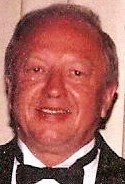
Peter J. Boettke, shuffling around in a maroon velour track suit or faux-leather rubber shoes he calls "dress Crocs," hardly seems like the type to lead a revolution.
But the 50-year-old professor of economics at George Mason University in Virginia is emerging as the intellectual standard-bearer for the Austrian school of economics that opposes government intervention in markets and decries federal spending to prop up demand during times of crisis. Mr. Boettke, whose latest research explores people's ability to self-regulate, also is minting a new generation of disciples who are spreading the Austrian approach throughout academia, where it had long been left for dead.
To these free-market economists, government intrusion ultimately sows the seeds of the next crisis. It hampers what one famous Austrian, Joseph Schumpeter, called the process of "creative destruction."
Governments that spend money they don't have to cushion downturns, they say, lead nations down the path of large debts and runaway inflation.
Eight decades ago, in the midst of the Great Depression, the Austrian school and its leading scholar, Friedrich A. von Hayek, fell out of favor relative to the more activist theories of John Maynard Keynes. The British economist's ideas, which called for aggressive government spending during recessions, triumphed then and in the decades since, reflected most recently in measures like the $814 billion stimulus package. Austrian adherents were marginalized, losing influence in prominent journals and among policy makers.
But as the economy flounders, debt mounts and growth—revised downward Friday—flags, Mr. Hayek and his Austrian-school adherents like Mr. Boettke are resurgent as their views resonate with more people.
"What I'm really worried about is an endless cycle of deficits, debt, and debasement of currency," Mr. Boettke says. "What we've done is engage in a set of policies that's turned a market correction into an economy-wide crisis."
Mr. Boettke got hooked on economics as a student at Grove City College. His commitment to economics is "always on," says his wife.
Others seem to agree. Mr. Hayek's 1944 classic, "The Road to Serfdom," became the top-selling book in June on Amazon.com. The Austrian think tank Foundation for Economic Education had to turn students away this summer from its overflowing seminars.
Showing posts with label Friedrich von Hayek. Show all posts
Showing posts with label Friedrich von Hayek. Show all posts
Saturday, August 28, 2010


Monday, July 12, 2010
Obama has us on "The Road to Serfdom," not having read it
Now he tells us. He's been reading Friedrich Hayek and Milton Friedman instead of playing golf and shooting hoops, as reported by the press. While no one was looking, he's been downloading podcasts of the Glenn Beck show and checking out heritage.org on his iPad. He's a born-again free-marketer, supply-sider, and friend of business large and small. That's the freely translated gist of President Obama's July 9 speech at the University of Nevada at Las Vegas.
Who would have known it? It is Obama who, as he "said in the campaign" and as he "repeated many times as President," thinks that the private sector is "the greatest generator of jobs in America." The "mess" we've gotten into is not his fault -- it's the fault of that commie-socialist George W. Bush. If Bush had cut taxes and government regulation the way Obama has been doing, we would have never have fallen into a recession to begin with.
Not so long ago, Obama declared that "greedy corporations" were the cause of all our ills. "Now is not the time for profits," he declared just after his inauguration. Now he tells us that "the private sector, not government, is, was, and always will be the source of America's economic success."
So far, however, the president has taken no action to prevent the Bush tax cuts from lapsing in January 2011. Absent congressional action, marginal rates, taxes on investment, and inheritance taxes will skyrocket from current levels -- and investment taxes will increase further in 2013 to help pay for Obamacare. But based on what the president said in Las Vegas, it was George Bush who was the tax-raiser, and it is Obama himself who has cut taxes. "One of the first things we did was cut dozens of taxes ... for middle class and small business people," Obama declared. When was that? Oh, yeah -- that was the extra $80 I got off my federal withholding in 2009.
It's not just that the president is a big tax-cutter. He has also created 600,000 jobs since taking office. (It is true that he has also lost five million jobs, but no matter.) About 500,000 of those new positions are temporary census jobs that are about to go away. The others have been created with federal stimulus dollars. A lot of dollars.
How about the Smith Electric Vehicles plant in Kansas City, which Obama visited just before coming to Las Vegas? So far, Smith Electric has received $32 million in funding to build electric vehicles. It's so successful that they've hired fifty workers. (That's $640,000 per job created.) The company builds the Smith Newton, a sporty little urban vehicle with a top speed of 50 mph. Smith Electric proposes to build a lot of Newtons, many of them to be purchased by the federal government. It hasn't built too many yet, but someday it will build five hundred, or even more. And someday, millions of green jobs will sprout up like green shoots.
This is the kind of entrepreneurship Obama is talking about.
Who would have known it? It is Obama who, as he "said in the campaign" and as he "repeated many times as President," thinks that the private sector is "the greatest generator of jobs in America." The "mess" we've gotten into is not his fault -- it's the fault of that commie-socialist George W. Bush. If Bush had cut taxes and government regulation the way Obama has been doing, we would have never have fallen into a recession to begin with.
Not so long ago, Obama declared that "greedy corporations" were the cause of all our ills. "Now is not the time for profits," he declared just after his inauguration. Now he tells us that "the private sector, not government, is, was, and always will be the source of America's economic success."
So far, however, the president has taken no action to prevent the Bush tax cuts from lapsing in January 2011. Absent congressional action, marginal rates, taxes on investment, and inheritance taxes will skyrocket from current levels -- and investment taxes will increase further in 2013 to help pay for Obamacare. But based on what the president said in Las Vegas, it was George Bush who was the tax-raiser, and it is Obama himself who has cut taxes. "One of the first things we did was cut dozens of taxes ... for middle class and small business people," Obama declared. When was that? Oh, yeah -- that was the extra $80 I got off my federal withholding in 2009.
It's not just that the president is a big tax-cutter. He has also created 600,000 jobs since taking office. (It is true that he has also lost five million jobs, but no matter.) About 500,000 of those new positions are temporary census jobs that are about to go away. The others have been created with federal stimulus dollars. A lot of dollars.
How about the Smith Electric Vehicles plant in Kansas City, which Obama visited just before coming to Las Vegas? So far, Smith Electric has received $32 million in funding to build electric vehicles. It's so successful that they've hired fifty workers. (That's $640,000 per job created.) The company builds the Smith Newton, a sporty little urban vehicle with a top speed of 50 mph. Smith Electric proposes to build a lot of Newtons, many of them to be purchased by the federal government. It hasn't built too many yet, but someday it will build five hundred, or even more. And someday, millions of green jobs will sprout up like green shoots.
This is the kind of entrepreneurship Obama is talking about.
Thursday, March 25, 2010
Hayek is again popular, but Obamacare intrudes government "in every nook and cranny..."
“The constitution was thus conceived as a protection of the people against all arbitrary action, on the part of the legislative as well as the other branches of government. A constitution which in such manner is to limit government must contain what in effect are substantive rules…It must lay down general principles which are to govern the acts of the appointed legislature.”
So wrote Friedrich Hayek in "The Constitution of Liberty" a half century ago. He went on to say that: “A group of men normally become a society not by giving themselves laws but by obeying the same rules of conduct. This means that the power of the majority is limited by those commonly held principles and that there is no legitimate power beyond them.” It is sad that Congress celebrated the 50th anniversary of Hayek’s work by ignoring any pretense that its power is limited. It is clear the Obama administration and the Democrat majority in Congress does not feel that the temporary majority is to be bound by any general principle other than “do you have the votes.” The 2000+page health care bill goes so far beyond what this country was founded on that it is difficult to know where to begin.
The bill is meant to involve the federal government in every nook and cranny of American life. Employers are told by their government what benefits they must provide employees. If we accept the proposition that the majority may tell employers and employees what their benefit package is, then where is the limitation that restricts this to health care? If the auto insurance companies have sufficient lobbying power, then we will be told that our benefit package must include auto insurance as well. And why not require employers to provide membership in health clubs, or country clubs? I personally would prefer season tickets to University of Michigan basketball games.
So wrote Friedrich Hayek in "The Constitution of Liberty" a half century ago. He went on to say that: “A group of men normally become a society not by giving themselves laws but by obeying the same rules of conduct. This means that the power of the majority is limited by those commonly held principles and that there is no legitimate power beyond them.” It is sad that Congress celebrated the 50th anniversary of Hayek’s work by ignoring any pretense that its power is limited. It is clear the Obama administration and the Democrat majority in Congress does not feel that the temporary majority is to be bound by any general principle other than “do you have the votes.” The 2000+page health care bill goes so far beyond what this country was founded on that it is difficult to know where to begin.
The bill is meant to involve the federal government in every nook and cranny of American life. Employers are told by their government what benefits they must provide employees. If we accept the proposition that the majority may tell employers and employees what their benefit package is, then where is the limitation that restricts this to health care? If the auto insurance companies have sufficient lobbying power, then we will be told that our benefit package must include auto insurance as well. And why not require employers to provide membership in health clubs, or country clubs? I personally would prefer season tickets to University of Michigan basketball games.
Sunday, February 14, 2010
We're hurtling down the road to serfdom
According to the Tax Foundation, 60 percent of the population now gets more in government benefits than it pays in taxes. What does it say about a society in which more than half the people live at the expense of the rest? Worse, the dependent class is growing. The 60 percent will soon be 70 percent.
Rep. Paul Ryan of Wisconsin seems to understand the threat: He's worried that "more people have a stake in the welfare state than in free enterprise. This is a road that Hayek perfectly described as 'the road to serfdom.'" (Tomorrow I will ask Ryan why, if he understands this, he voted for TARP and the auto bailouts.)
Kurt Vonnegut understood the threat of government-imposed equality. His short story Harrison Bergeron portrays a future in which no one is permitted to have any physical or intellectual advantage over anyone else. A government Handicapper General weighs down the strong and agile, masks the faces of the beautiful and distracts the smart.
So far, the Handicapper General is just fantasy. But Vice President Joe Biden did shout at the Democratic National Convention: "Everyone is your equal, and everyone is equal to you." If he meant that we're all equal in rights and before the law, fine. If he meant government shouldn't put barriers in the way of opportunity, great. But statists like Biden usually have more in mind: They want government to make results more equal.
Rep. Paul Ryan of Wisconsin seems to understand the threat: He's worried that "more people have a stake in the welfare state than in free enterprise. This is a road that Hayek perfectly described as 'the road to serfdom.'" (Tomorrow I will ask Ryan why, if he understands this, he voted for TARP and the auto bailouts.)
Kurt Vonnegut understood the threat of government-imposed equality. His short story Harrison Bergeron portrays a future in which no one is permitted to have any physical or intellectual advantage over anyone else. A government Handicapper General weighs down the strong and agile, masks the faces of the beautiful and distracts the smart.
So far, the Handicapper General is just fantasy. But Vice President Joe Biden did shout at the Democratic National Convention: "Everyone is your equal, and everyone is equal to you." If he meant that we're all equal in rights and before the law, fine. If he meant government shouldn't put barriers in the way of opportunity, great. But statists like Biden usually have more in mind: They want government to make results more equal.
Subscribe to:
Posts (Atom)