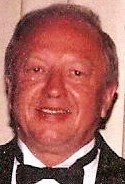
Peter J. Boettke, shuffling around in a maroon velour track suit or faux-leather rubber shoes he calls "dress Crocs," hardly seems like the type to lead a revolution.
But the 50-year-old professor of economics at George Mason University in Virginia is emerging as the intellectual standard-bearer for the Austrian school of economics that opposes government intervention in markets and decries federal spending to prop up demand during times of crisis. Mr. Boettke, whose latest research explores people's ability to self-regulate, also is minting a new generation of disciples who are spreading the Austrian approach throughout academia, where it had long been left for dead.
To these free-market economists, government intrusion ultimately sows the seeds of the next crisis. It hampers what one famous Austrian, Joseph Schumpeter, called the process of "creative destruction."
Governments that spend money they don't have to cushion downturns, they say, lead nations down the path of large debts and runaway inflation.
Eight decades ago, in the midst of the Great Depression, the Austrian school and its leading scholar, Friedrich A. von Hayek, fell out of favor relative to the more activist theories of John Maynard Keynes. The British economist's ideas, which called for aggressive government spending during recessions, triumphed then and in the decades since, reflected most recently in measures like the $814 billion stimulus package. Austrian adherents were marginalized, losing influence in prominent journals and among policy makers.
But as the economy flounders, debt mounts and growth—revised downward Friday—flags, Mr. Hayek and his Austrian-school adherents like Mr. Boettke are resurgent as their views resonate with more people.
"What I'm really worried about is an endless cycle of deficits, debt, and debasement of currency," Mr. Boettke says. "What we've done is engage in a set of policies that's turned a market correction into an economy-wide crisis."
Mr. Boettke got hooked on economics as a student at Grove City College. His commitment to economics is "always on," says his wife.
Others seem to agree. Mr. Hayek's 1944 classic, "The Road to Serfdom," became the top-selling book in June on Amazon.com. The Austrian think tank Foundation for Economic Education had to turn students away this summer from its overflowing seminars.
Showing posts with label free markets. Show all posts
Showing posts with label free markets. Show all posts
Saturday, August 28, 2010


Saturday, July 31, 2010
Michigan's failed Gov. Granholm blames markets for Michigan's 800,000 lost jobs, looks for salvation in the unaffordable Volt
Michigan has been the star witness to the global shift in manufacturing jobs. Early in my first term, Electrolux told us there was nothing we could do to prevent them from moving their Greenville, Michigan, appliance business to Mexico. Since 1892, tiny Greenville had been the refrigerator capital, serving as home to Gibson, White, Frigidaire and Electrolux. Electrolux was the last to close, in 2004, and with it some 2,700 jobs were lost. The reason why? The wages in Ciudad Juarez were just $1.57 per hour, far outweighing our offers of enormous tax abatements, supplier haircuts and skinnied union contracts. Electrolux was the tip of the iceberg. Michigan alone has lost more than 800,000 jobs since the beginning of this century.
Fortunately, sometime along the way, people began waking up.
There was rumbling in some boardrooms that things needed to be done differently. Worker representatives took crash courses in reviewing P&Ls, SEC filings and org charts. And American voters decided they needed a president and federal government that would jettison the old theories of laissez faire, supply-side and hands off -- and weigh in on the side of American workers and the U.S. economy.
While we won't be able to keep all labor-intensive manufacturing jobs in America, here's what we're finding out: We can keep skill-intensive, advanced manufacturing jobs here. We're now seeing the first real evidence that we're "cracking the code" of what it takes for advanced manufacturing to stay and grow in America. Today, as President Barack Obama visits two major auto assembly plants in the heart of the Motor City, he'll hear the heartbeat of the American economy starting to pound. The patient is alive!
At General Motors' Detroit-Hamtramck Assembly Plant, Chevrolet is building its hottest -- no, coolest -- vehicle in its lifetime, the new plug-in electric Chevrolet Volt that'll hit dealerships this fall. A few miles away, Chrysler is cranking out its new Jeep Grand Cherokee. That new Jeep, which its CEO tells me is "flawless," is not your father's Jeep -- it's designed and powered for fuel efficiency and economy.
Fortunately, sometime along the way, people began waking up.
There was rumbling in some boardrooms that things needed to be done differently. Worker representatives took crash courses in reviewing P&Ls, SEC filings and org charts. And American voters decided they needed a president and federal government that would jettison the old theories of laissez faire, supply-side and hands off -- and weigh in on the side of American workers and the U.S. economy.
While we won't be able to keep all labor-intensive manufacturing jobs in America, here's what we're finding out: We can keep skill-intensive, advanced manufacturing jobs here. We're now seeing the first real evidence that we're "cracking the code" of what it takes for advanced manufacturing to stay and grow in America. Today, as President Barack Obama visits two major auto assembly plants in the heart of the Motor City, he'll hear the heartbeat of the American economy starting to pound. The patient is alive!
At General Motors' Detroit-Hamtramck Assembly Plant, Chevrolet is building its hottest -- no, coolest -- vehicle in its lifetime, the new plug-in electric Chevrolet Volt that'll hit dealerships this fall. A few miles away, Chrysler is cranking out its new Jeep Grand Cherokee. That new Jeep, which its CEO tells me is "flawless," is not your father's Jeep -- it's designed and powered for fuel efficiency and economy.
Monday, April 5, 2010
Treasury Secretary Timothy Geithner said Saturday the U.S. would delay a report to Congress on the currency policies of major trading partners, including China, citing a spate of high-level meetings between China and the U.S. The meetings, he said, "are the best avenue for advancing U.S. interests at this time."
In a carefully worded and direct statement, Mr. Geithner said the Asian giant was relying on "currency intervention" and must move to a "more market-oriented exchange rate."
How hypocritical is this? The Obama administration, presiding over a nation founded on the market system, routinely disdains market solutions to domestic issues, such as costly health insurance premiums, but wants to foist markets on China.
Lecturing China is the right thing to do in this case. The administration could solve the hypocrisy problem by applying the market system to a wide range of issues at home. One thing it could do is tell its Democrat friends in Congress to stop demonizing AT&T and other corporations for publicly revealing that they are writing off their additional costs brought about by Obamacare.
This administration and its allies have a breathtaking tendency to say one thing and do another.
In a carefully worded and direct statement, Mr. Geithner said the Asian giant was relying on "currency intervention" and must move to a "more market-oriented exchange rate."
How hypocritical is this? The Obama administration, presiding over a nation founded on the market system, routinely disdains market solutions to domestic issues, such as costly health insurance premiums, but wants to foist markets on China.
Lecturing China is the right thing to do in this case. The administration could solve the hypocrisy problem by applying the market system to a wide range of issues at home. One thing it could do is tell its Democrat friends in Congress to stop demonizing AT&T and other corporations for publicly revealing that they are writing off their additional costs brought about by Obamacare.
This administration and its allies have a breathtaking tendency to say one thing and do another.
Friday, January 29, 2010
Most question government's handling of crisis, want free market solutions to problems
A new national poll finds a crisis of confidence on economic issues among Americans – and younger Americans (those 18-29) – alike.
Among the key findings, Americans and Millennials:
• Are not confident in the government’s ability to handle the economic crisis. (59% of Americans; 55% of Millennials)
• Want a free market approach and oppose greater government regulation of business. (55% of Americans; 53% of Millennials)
• Believe the country is headed in the wrong direction. (67% of Americans; 60% of Millennials)
• Want the same set of moral standards in business life as in personal life. (75% of Americans; 66% of Millennials)
• See business decisions based on greed as morally wrong. (74% of Americans; 77% of Millennials)
• Think their careers will be negatively impacted for the long-term by the current economic situation (55% of Americans under 65 years old; 55% of Millennials).
“A year into the Obama administration, we find that Americans – and younger Americans – are having a crisis of confidence,” says Carl Anderson, CEO of the Knights of Columbus, the group that commissioned the poll. “People are increasingly pessimistic about the government's ability to handle the economic crisis and a majority believes that increased government regulation will hurt the economy.”
Among the key findings, Americans and Millennials:
• Are not confident in the government’s ability to handle the economic crisis. (59% of Americans; 55% of Millennials)
• Want a free market approach and oppose greater government regulation of business. (55% of Americans; 53% of Millennials)
• Believe the country is headed in the wrong direction. (67% of Americans; 60% of Millennials)
• Want the same set of moral standards in business life as in personal life. (75% of Americans; 66% of Millennials)
• See business decisions based on greed as morally wrong. (74% of Americans; 77% of Millennials)
• Think their careers will be negatively impacted for the long-term by the current economic situation (55% of Americans under 65 years old; 55% of Millennials).
“A year into the Obama administration, we find that Americans – and younger Americans – are having a crisis of confidence,” says Carl Anderson, CEO of the Knights of Columbus, the group that commissioned the poll. “People are increasingly pessimistic about the government's ability to handle the economic crisis and a majority believes that increased government regulation will hurt the economy.”
Friday, November 6, 2009
Government manipulates all markets, driving up prices; adds 6 percent to home prices
A recent CBO report estimated that the government spends about $300 billion to intervene in the housing market each year. That's based on a range of activities, from direct subsidies to homebuyers, to the mortgage interest tax deduction, and the backstop of Fannie and Freddie.
And thus it's no surprise that the housing market doesn't work like other markets, and that we had a major bubble there. Even now, Goldman Sachs estimates, the government is adding at least 5% to the cost of each home, through its various "affordability" measures.
But it's not just housing. Virtually every important sector of the economy is being manipulated in some way.
And thus it's no surprise that the housing market doesn't work like other markets, and that we had a major bubble there. Even now, Goldman Sachs estimates, the government is adding at least 5% to the cost of each home, through its various "affordability" measures.
But it's not just housing. Virtually every important sector of the economy is being manipulated in some way.
Thursday, October 15, 2009
Organ sales by the living: a debate we ought to have
"...the one-year transplant survival rate from living kidney donors is 95 percent compared to 89 percent from deceased donors. The five-year
transplant survival rate is 80 percent from living donors and 65 percent from deceased donors. Kidney transplants are much cheaper than maintaining a patient in renal failure on dialysis.
Right now, 55 countries legally prohibit giving or receiving payment for organs. However, 62 countries do allow living donors to be compensated for their lost wages and medical expenses. Caplan and colleagues want to clearly distinguish between sales of organs, tissues, and cells, on the one hand, and trafficking in people whose organs are removed for transplantation on the other—and rightly so.
But the Caplan study cites estimates that “up to 5 to10 percent of kidney transplants performed annually around the world are the result of trafficking.” That translates into somewhere between 3,400 to 6,800 gray or black market kidney transplants per year. Until tissue engineering becomes a reality, enabling replacement organs to be grown in vats, the demand for “donated” organs will increasingly outstrip supply.
By prohibiting the development of legal markets in human organs, the United Nations is ultimately forcing more desperately poor people who wish to sell their organs into black markets, penalizing them for their poverty, and implying that they lack the ability to make rational decisions about what to do with their bodies. Paternalism is bad enough, but banning organ markets is ineffective and counterproductive paternalism at its worst.
transplant survival rate is 80 percent from living donors and 65 percent from deceased donors. Kidney transplants are much cheaper than maintaining a patient in renal failure on dialysis.
Right now, 55 countries legally prohibit giving or receiving payment for organs. However, 62 countries do allow living donors to be compensated for their lost wages and medical expenses. Caplan and colleagues want to clearly distinguish between sales of organs, tissues, and cells, on the one hand, and trafficking in people whose organs are removed for transplantation on the other—and rightly so.
But the Caplan study cites estimates that “up to 5 to10 percent of kidney transplants performed annually around the world are the result of trafficking.” That translates into somewhere between 3,400 to 6,800 gray or black market kidney transplants per year. Until tissue engineering becomes a reality, enabling replacement organs to be grown in vats, the demand for “donated” organs will increasingly outstrip supply.
By prohibiting the development of legal markets in human organs, the United Nations is ultimately forcing more desperately poor people who wish to sell their organs into black markets, penalizing them for their poverty, and implying that they lack the ability to make rational decisions about what to do with their bodies. Paternalism is bad enough, but banning organ markets is ineffective and counterproductive paternalism at its worst.
Sunday, September 27, 2009
Obama often disdains free markets, but he has yet to win over U.S. voters or the Chinese government
Reprint of a post dated Monday, September 29, 2008
Do we want a command economy?
The most persuasive evidence that Barack Obama is unfit for the presidency is the frequency with which he deploys one phrase, "I will invest." The implication is inescapable. He plans to install a command economy. He will decide which path to the future is the right one.
This is not what the framers had in mind, nor is it the formula the United States has followed in building the world's mightiest economy.
The president did not tell the Wright brothers to build an airplane.
The president did not tell Thomas Edison to design a light bulb.
The president did not tell Henry Ford to build a car.
The president did not tell Jonas Salk to find a remedy for polio.
The president did not tell Babe Ruth to hit 60 home runs in a season.
Each of these pioneers saw a potential market and tried to accommodate it, confident that rewards would follow.
There have been many other pioneers, some driven by benevolent impulses, others by a desire to get rich. Some got lucky and stumbled across useful products while working on something else.
It is comonplace now, especially among leftists, to disparage wealth-seeking, but without it we wouldn't be where we are.
Paradoxically, it seems to be acceptable among leftists to stuff one's pockets if one is doing so in a government office. Executives of Fannie Mae hauled in tens of millions of dollars each in a few years, at times by cooking the books to inflate profits.
Where are the howls of outrage about this form of wealth-seeking?
In writing the constitution, the framers were influenced by the initial publication of Adam Smith's "The Wealth of Nations" in 1776. The book highlighted the role of free markets and laid the foundation for modern capitalism. Its principles are woven into the law of the land.
The book remains relevant today, as was pointed out by Robert Reich, secretary of Labor in the Clinton administration, who wrote this in an introduction: "Smith's mind ranged over issues as fresh and topical today as they were in the late 18th Century - jobs, wages, politics, government, trade, education, business and ethics."
Elections are, of course, free market principles applied to politics.
It is not hard to find examples of a command economy. Cuba is one. Zimbabwe is another. Russia was a superb example until its empire collapsed and it had to adapt to the modern competitive world.
As the empire teetered, Time sent correspondents to Russia to take the pulse of the people.
When asked to describe the Russian system, a blue-collar worker said, "We pretend to work and they pretend to pay us."
Posted by TheRightFieldLine at 9:10 AM
Labels: Adam Smith, economics, Obama, politics, U.S. constitution,
Update:
Eight months into his presidency, Obama has made good on my worst fears. Through legislation and executive actions he has demonstrated across-the-board contempt for free markets.
He seized control of General Motors and Chrysler, ram-rodded a $787 billion "stimulus" that is largely a gigantic pile of earmarks targeted for Democrat interest groups and has refused to even consider markets as an antidote to rising medical costs.
Through legislation, Obama could restore competition to the medical insurance industry by allowing companies to market their products across state lines. Instead, he has brushed the idea aside in favor of more government controls on medicine and medical insurance. One of his objectives is a new government insurance option, which could forego profits, operate at lower costs, and eventually drive private insurers out of business.
Even in authoritarian countries, such as China, however, free markets have important fans, and China now is likely to deprive Obama of one of his most prized objectives.
Taking advantage of low production costs, China has become a trading giant and is regularly adding new coal-fired power plants to its industrial base. China rejects any suggestion that it damage its competetive advantage by assessing a tax on carbon emissions.
In Washington, a cap and trade scheme that would impose such a carbon tax has been passed by the House and is pending before the Senate. If Obama continues to push the cap and trade bill, and the Senate goes along, the U.S. government will have handed the Chinese a significant price advantage in international markets, and U.S. companies will take another hit.
My bet: markets will prevail. Obama will be deprived of at least one of his two must-pass bills. The other must pass bill, an overhaul of health care, remains on life support. The voter market does not like the seemingly inevitable rationing of health care under the reform proposal.
Do we want a command economy?
The most persuasive evidence that Barack Obama is unfit for the presidency is the frequency with which he deploys one phrase, "I will invest." The implication is inescapable. He plans to install a command economy. He will decide which path to the future is the right one.
This is not what the framers had in mind, nor is it the formula the United States has followed in building the world's mightiest economy.
The president did not tell the Wright brothers to build an airplane.
The president did not tell Thomas Edison to design a light bulb.
The president did not tell Henry Ford to build a car.
The president did not tell Jonas Salk to find a remedy for polio.
The president did not tell Babe Ruth to hit 60 home runs in a season.
Each of these pioneers saw a potential market and tried to accommodate it, confident that rewards would follow.
There have been many other pioneers, some driven by benevolent impulses, others by a desire to get rich. Some got lucky and stumbled across useful products while working on something else.
It is comonplace now, especially among leftists, to disparage wealth-seeking, but without it we wouldn't be where we are.
Paradoxically, it seems to be acceptable among leftists to stuff one's pockets if one is doing so in a government office. Executives of Fannie Mae hauled in tens of millions of dollars each in a few years, at times by cooking the books to inflate profits.
Where are the howls of outrage about this form of wealth-seeking?
In writing the constitution, the framers were influenced by the initial publication of Adam Smith's "The Wealth of Nations" in 1776. The book highlighted the role of free markets and laid the foundation for modern capitalism. Its principles are woven into the law of the land.
The book remains relevant today, as was pointed out by Robert Reich, secretary of Labor in the Clinton administration, who wrote this in an introduction: "Smith's mind ranged over issues as fresh and topical today as they were in the late 18th Century - jobs, wages, politics, government, trade, education, business and ethics."
Elections are, of course, free market principles applied to politics.
It is not hard to find examples of a command economy. Cuba is one. Zimbabwe is another. Russia was a superb example until its empire collapsed and it had to adapt to the modern competitive world.
As the empire teetered, Time sent correspondents to Russia to take the pulse of the people.
When asked to describe the Russian system, a blue-collar worker said, "We pretend to work and they pretend to pay us."
Posted by TheRightFieldLine at 9:10 AM
Labels: Adam Smith, economics, Obama, politics, U.S. constitution,
Update:
Eight months into his presidency, Obama has made good on my worst fears. Through legislation and executive actions he has demonstrated across-the-board contempt for free markets.
He seized control of General Motors and Chrysler, ram-rodded a $787 billion "stimulus" that is largely a gigantic pile of earmarks targeted for Democrat interest groups and has refused to even consider markets as an antidote to rising medical costs.
Through legislation, Obama could restore competition to the medical insurance industry by allowing companies to market their products across state lines. Instead, he has brushed the idea aside in favor of more government controls on medicine and medical insurance. One of his objectives is a new government insurance option, which could forego profits, operate at lower costs, and eventually drive private insurers out of business.
Even in authoritarian countries, such as China, however, free markets have important fans, and China now is likely to deprive Obama of one of his most prized objectives.
Taking advantage of low production costs, China has become a trading giant and is regularly adding new coal-fired power plants to its industrial base. China rejects any suggestion that it damage its competetive advantage by assessing a tax on carbon emissions.
In Washington, a cap and trade scheme that would impose such a carbon tax has been passed by the House and is pending before the Senate. If Obama continues to push the cap and trade bill, and the Senate goes along, the U.S. government will have handed the Chinese a significant price advantage in international markets, and U.S. companies will take another hit.
My bet: markets will prevail. Obama will be deprived of at least one of his two must-pass bills. The other must pass bill, an overhaul of health care, remains on life support. The voter market does not like the seemingly inevitable rationing of health care under the reform proposal.
Friday, September 18, 2009
Economy will recover despite government efforts
"Recessions don't peter out in 10 days, of course. But they do eventually end, with or without central bankers' help. According to the National Bureau of Economic Research, the US went through 32 recessions between 1854 and 2001, the average duration of which was about 17 months - or a few months shorter than the current recession, so far.
"Even a severe downturn can be followed by rapid recovery without aggressive central bank intervention. In the 1921 recession, wholesale prices, industrial production, and manufacturing employment all fell by 30 percent or more within a year. Yet by early 1922, the US economy had recovered fully from its mid-1921 low. What's more, it did so with no help from the Fed, which was determined to let the recession take its course, so as to hasten the restoration of the prewar gold standard.
Bernanke, in contrast, has been praised for taking bold, innovative measures to tame a supposedly unprecedented economic collapse. But his innovations included errors of both commission and omission that almost certainly deepened the recent downturn, making it last that much longer."
My take: As I have argued earlier, politicians rush to take ameliorative action early in recessions not to end the recessions but to position themselves to take credit for ending the recessions. They hurry because they don't know when the recessions will end through the normal workings of a free economy. Just as they are loathe to waste an economic calamity, so are they loathe to waste the return of better times.
The only departure from the pattern by the Obama administration lay in its resort to fascist policies, such as the takeover of General Motors and Chrysler and its unparalleled spending. If the past is prologue, the administration's self-congratulation will be unusually loud and especially offensive.
Chances are that economic historians will find that the frantic anti-recession efforts worsened the recession, as President Franklin Roosevelt's policies did in the early 1930s.
Markets work, but liberal politicians don't want to acknowledge that fact.
"Even a severe downturn can be followed by rapid recovery without aggressive central bank intervention. In the 1921 recession, wholesale prices, industrial production, and manufacturing employment all fell by 30 percent or more within a year. Yet by early 1922, the US economy had recovered fully from its mid-1921 low. What's more, it did so with no help from the Fed, which was determined to let the recession take its course, so as to hasten the restoration of the prewar gold standard.
Bernanke, in contrast, has been praised for taking bold, innovative measures to tame a supposedly unprecedented economic collapse. But his innovations included errors of both commission and omission that almost certainly deepened the recent downturn, making it last that much longer."
My take: As I have argued earlier, politicians rush to take ameliorative action early in recessions not to end the recessions but to position themselves to take credit for ending the recessions. They hurry because they don't know when the recessions will end through the normal workings of a free economy. Just as they are loathe to waste an economic calamity, so are they loathe to waste the return of better times.
The only departure from the pattern by the Obama administration lay in its resort to fascist policies, such as the takeover of General Motors and Chrysler and its unparalleled spending. If the past is prologue, the administration's self-congratulation will be unusually loud and especially offensive.
Chances are that economic historians will find that the frantic anti-recession efforts worsened the recession, as President Franklin Roosevelt's policies did in the early 1930s.
Markets work, but liberal politicians don't want to acknowledge that fact.
National Post: Death of markets exaggerated
While all around us are hailing the death of free markets and the end of capitalism, nobody seems to have noticed how ugly capitalists are now rekindling the global economy. For people who don't know how markets work and how self-interest drives business activity, two good examples of capitalist-like greed in action include the mini-boom in the North American auto market and the emerging bubblet in Canadian housing. More broadly, the U. S. financial sector, responding to market signals, is also back in the business of cranking out fancy investment instruments and paying bonuses to people who do. Business investment is picking up. Stock prices are rising, and gold is setting price records.
Capitalism is dead, eh? Well, long live capitalism--or at least as much capitalism as we are allowed to enjoy. It may be news to many, but the very market forces that allegedly triggered the financial crisis are now triggering recovery. As French President Nicolas Sarkozy ( "the markets are mad") and other leaders of the G20 gear up for their market-bashing Pittsburgh Summit next week, they do so surrounded by millions of people who are now chasing the new market signals offered up by changing market conditions and despite new government policy. Rather than bash free markets, the G20 should hold a one-minute prayer to give thanks that markets still work and that people respond in their own self-interested way to whatever economic signals they get.
Capitalism is dead, eh? Well, long live capitalism--or at least as much capitalism as we are allowed to enjoy. It may be news to many, but the very market forces that allegedly triggered the financial crisis are now triggering recovery. As French President Nicolas Sarkozy ( "the markets are mad") and other leaders of the G20 gear up for their market-bashing Pittsburgh Summit next week, they do so surrounded by millions of people who are now chasing the new market signals offered up by changing market conditions and despite new government policy. Rather than bash free markets, the G20 should hold a one-minute prayer to give thanks that markets still work and that people respond in their own self-interested way to whatever economic signals they get.
Sunday, August 2, 2009
What we need is market-driven health care
"... here's one partial vision of how a system of competitive health care and health insurance might develop if real reform were adopted.
The typical American might purchase high-deductible health insurance policies that would cover expensive treatments for chronic diseases such as heart disease, cancer, AIDS, diabetes, multiple sclerosis, or the catastrophic consequences of accidents. Coverage would also include expensive treatments such as heart surgery, organ transplants, dialysis, radiation therapy, etc. In addition, Americans would be able to buy health-status insurance that would guarantee that they could purchase health insurance at reasonable prices in the future.
The good news is that such policies are available even now."
The typical American might purchase high-deductible health insurance policies that would cover expensive treatments for chronic diseases such as heart disease, cancer, AIDS, diabetes, multiple sclerosis, or the catastrophic consequences of accidents. Coverage would also include expensive treatments such as heart surgery, organ transplants, dialysis, radiation therapy, etc. In addition, Americans would be able to buy health-status insurance that would guarantee that they could purchase health insurance at reasonable prices in the future.
The good news is that such policies are available even now."
Friday, July 17, 2009
Reckless capitalists doing deals without nanny
"That lethargic patient known as the American capital market showed signs of life this week. Washington's decision to put away the defibrillator paddles and let nature take its course at CIT Group means that, finally, Beltway physicians have done no more harm. More good news came from Credit Suisse, which sold mortgage-backed securities with no government guarantees and no opinions from the credit-ratings agencies.
That's right, someone has managed to finance mortgages without putting taxpayers at risk. Just as encouraging, it turns out that investors really can analyze bonds not rated by the government-anointed geniuses at Standard & Poor's, Moody's and Fitch. We'll get to the caveats in a moment, but first let's savor that Washington is willing to consider a new course of treatment that includes the freedom to fail, while Wall Street is showing that markets can solve the problem of opaque securities."
http://online.wsj.com/article/SB124779737373155801.html
That's right, someone has managed to finance mortgages without putting taxpayers at risk. Just as encouraging, it turns out that investors really can analyze bonds not rated by the government-anointed geniuses at Standard & Poor's, Moody's and Fitch. We'll get to the caveats in a moment, but first let's savor that Washington is willing to consider a new course of treatment that includes the freedom to fail, while Wall Street is showing that markets can solve the problem of opaque securities."
http://online.wsj.com/article/SB124779737373155801.html
Thursday, March 12, 2009
Obama's hyperbole reveals antimarket intentions
Barack Obama, the would-be central planner, unwittingly signaled Thursday that he intends to impose government controls on the American economy totally foreign to the blueprint of the founders.
He is, of course, doing it for us. He wants to get rid of those troubling ups and downs that have, time and again, caused upheavals in households, businesses and government bodies.
It is through those hiccups that the economy works out imbalances that inevitably result from millions of decisions made by families and businesses, each in pursuit of its own objectives. People decide what to buy. Businesses take account of what's selling and produce more of some goods and less of others. Then tastes change, and businesses wind up with unsold products.
In the late 1990s, the huge promise of computer technology resulted in a red-hot market for computer-related stocks, which rocketed to levels that could not be sustained by the actual performance of technology businesses. The bubble burst, and many investors lost money.
It was nothing more than free markets adjusting expectations to reality. It was the small price we paid for a free consumer-driven economy.
To Obama, however, such hiccups are dire and must be overcome. On Thursday, addressing a gathering of chief executives, Obama bemoaned the "endless cycle of bubble and bust," and said he would attempt to build a new foundation for future growth.
Translation: the Obama administration intends to wrest control of the economy from the hands of individuals, families and businesses. The current recession, Obama said, can't serve "as an excuse to keep ignoring the long-term threats to our prosperity."
That prosperity, of course, was brought about by the energizing potential of an economy that allows people from the most humble beginnings to prosper. Obama apparently believes we'd be better off with a government-run economy along the lines of Cuba or Zimbabwe.
This would be startling even in the absence of the obvious fact that the most dangerous recent threats to American prosperity have come from government. It was Democrats, during the Carter administration, who embarked on a decades-long social engineering campaign to expand home ownership, resulting in an erosion of lending standards that previously had required borrowers to have a record of credit-worthiness to obtain a mortgage.
It was government-sponsored entities, Fannie Mae and Freddie Mac, that facilitated this erosion by camouflaging risk and and elevating home mortgages to the level of big-time investments that flourished in world financial markets. The result was a huge bubble in the U.S.housing market.
The Bush administration not only went along with the boom, but pumped it up. During the Bush years, use of the Carter-era Community Reinvestment Act actually increased. Meanwhile, the Federal Reserve system kept interest rates too low for too long, further inflating the housing market, while the Securities and Exchange Commission somehow failed to detect danger in the high-flying mortgage-based securities.
Alan Greenspan, who was chairman of the Federal Reserve at the time, recently admitted as much, saying he had over-estimated the ability of private corporations to look after their vital interests, including survival. He forgot to mention that elected officials and bureaucrats, along with pressure groups such as ACORN, had been pummeling the mortgage market for decades in service of their social engineering project.
We no longer had a free market in mortgages. We had a government-driven market through which Democrat politicians obtained favorable mortgages for themselves, and in some cases became millionaires.
Now we have a government-made recession, which Obama is falsely attributing to free market excesses and is using to justify new government intrusions in the economy. This is in keeping with his "stimulus" package, whose premise is that government, rather than rank and file taxpayers, will spend newfound money to the best effect.
Less than half of the stimulus is allocated to tax cuts, which leave spending decisiions in the hands of individuals and families. Most of the money will be spent by government. Will bridges to nowhere become a common feature of the American landscape? Will we have more Big Digs of the sort pioneered in Boston?
How long will it take for the American economy to rise to the inspiring level manifested by Cuba and Zimbabwe?
He is, of course, doing it for us. He wants to get rid of those troubling ups and downs that have, time and again, caused upheavals in households, businesses and government bodies.
It is through those hiccups that the economy works out imbalances that inevitably result from millions of decisions made by families and businesses, each in pursuit of its own objectives. People decide what to buy. Businesses take account of what's selling and produce more of some goods and less of others. Then tastes change, and businesses wind up with unsold products.
In the late 1990s, the huge promise of computer technology resulted in a red-hot market for computer-related stocks, which rocketed to levels that could not be sustained by the actual performance of technology businesses. The bubble burst, and many investors lost money.
It was nothing more than free markets adjusting expectations to reality. It was the small price we paid for a free consumer-driven economy.
To Obama, however, such hiccups are dire and must be overcome. On Thursday, addressing a gathering of chief executives, Obama bemoaned the "endless cycle of bubble and bust," and said he would attempt to build a new foundation for future growth.
Translation: the Obama administration intends to wrest control of the economy from the hands of individuals, families and businesses. The current recession, Obama said, can't serve "as an excuse to keep ignoring the long-term threats to our prosperity."
That prosperity, of course, was brought about by the energizing potential of an economy that allows people from the most humble beginnings to prosper. Obama apparently believes we'd be better off with a government-run economy along the lines of Cuba or Zimbabwe.
This would be startling even in the absence of the obvious fact that the most dangerous recent threats to American prosperity have come from government. It was Democrats, during the Carter administration, who embarked on a decades-long social engineering campaign to expand home ownership, resulting in an erosion of lending standards that previously had required borrowers to have a record of credit-worthiness to obtain a mortgage.
It was government-sponsored entities, Fannie Mae and Freddie Mac, that facilitated this erosion by camouflaging risk and and elevating home mortgages to the level of big-time investments that flourished in world financial markets. The result was a huge bubble in the U.S.housing market.
The Bush administration not only went along with the boom, but pumped it up. During the Bush years, use of the Carter-era Community Reinvestment Act actually increased. Meanwhile, the Federal Reserve system kept interest rates too low for too long, further inflating the housing market, while the Securities and Exchange Commission somehow failed to detect danger in the high-flying mortgage-based securities.
Alan Greenspan, who was chairman of the Federal Reserve at the time, recently admitted as much, saying he had over-estimated the ability of private corporations to look after their vital interests, including survival. He forgot to mention that elected officials and bureaucrats, along with pressure groups such as ACORN, had been pummeling the mortgage market for decades in service of their social engineering project.
We no longer had a free market in mortgages. We had a government-driven market through which Democrat politicians obtained favorable mortgages for themselves, and in some cases became millionaires.
Now we have a government-made recession, which Obama is falsely attributing to free market excesses and is using to justify new government intrusions in the economy. This is in keeping with his "stimulus" package, whose premise is that government, rather than rank and file taxpayers, will spend newfound money to the best effect.
Less than half of the stimulus is allocated to tax cuts, which leave spending decisiions in the hands of individuals and families. Most of the money will be spent by government. Will bridges to nowhere become a common feature of the American landscape? Will we have more Big Digs of the sort pioneered in Boston?
How long will it take for the American economy to rise to the inspiring level manifested by Cuba and Zimbabwe?
Subscribe to:
Posts (Atom)